REVIEW · TAHITI
Tahiti Classical Coastal Full Day Private Tour
Book on GetYourGuide →Operated by Tahiti Top Tours · Bookable on GetYourGuide
One day can feel like two different worlds. This private coastal route takes you through Tahiti Nui and Tahiti Iti, mixing ancient Polynesian sites with real nature stops. I especially liked the way the day pairs big-picture cultural context at the Ārahurahu Marae with hands-on scenery like water-filled caves and black-sand shorelines, so it doesn’t turn into random photo stops.
My second favorite part is the pacing: it’s an easygoing 8-hour loop in an air-conditioned minivan with a headset system, so you can relax while still hitting the key points. The one drawback to think about is time: it’s a packed day of short visits and driving, so if you’re looking for slow and minimal-stop wandering, this format may feel busy.
In This Review
- Key highlights worth your attention
- How the route stitches together Tahiti Nui and Tahiti Iti
- Getting around in an air-conditioned private van with headsets
- Ārahurahu Marae and Maraa Caves: the calm, sacred side of Tahiti
- Taharuu black-sand beach and Vaipahi Water Gardens
- Lunch at the Paul Gauguin Museum restaurant with ocean views
- Taravao viewpoint and Phaeton Bay: anchorage views that anchor the day
- Waterfalls and blowhole: Faaone double waterfall, Fa’aruma’i, and Arahoho
- Pointe Vénus finale: black sand, Cook’s era stories, and Pomare connections
- Price and included value: what you’re really paying for
- Who should book this Tahiti Classical Coastal tour
- Should you book it?
- FAQ
- Where does the tour pick up in Tahiti?
- How long is the Tahiti Classical Coastal private tour?
- Is lunch included in the tour price?
- How big is the group for this private tour?
- What languages are available for the guide?
- What’s included besides the guide and transportation?
- Are alcoholic drinks allowed during the tour?
- Does the itinerary ever change?
- Can I cancel and get a full refund?
Key highlights worth your attention
- Two Tahiti halves in one day: you get both Nui and Iti, not just one side of the island
- Marae + cave combo: spiritual site at Ārahurahu, then cool down at Maraa Caves
- Black-sand beaches: Taharuu’s surfer energy and the cultural stop at Pointe Vénus
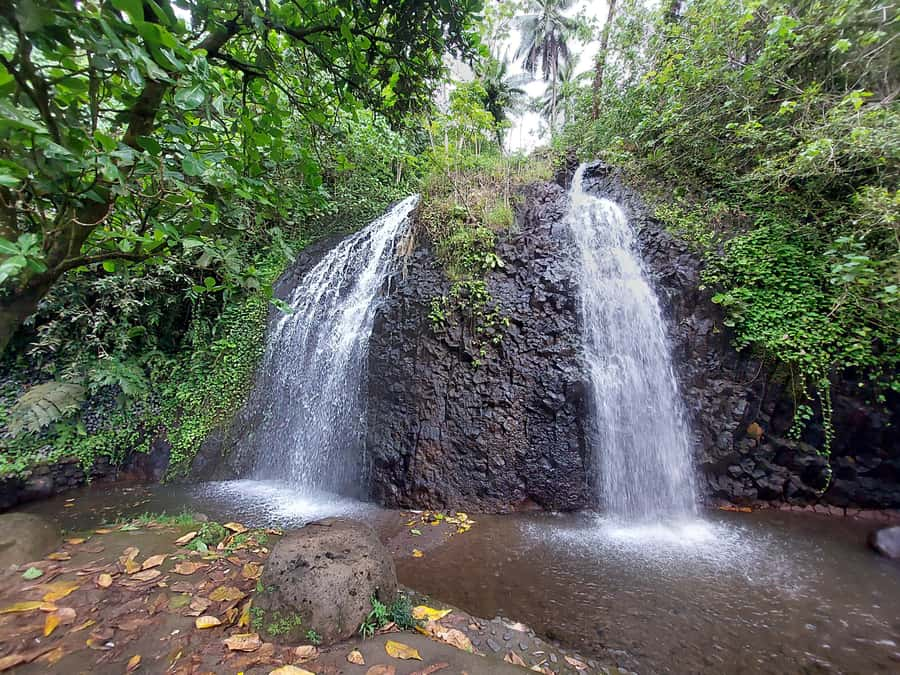
- Waterfall focus: multiple waterfall moments, including a double waterfall stop
- Guides who manage the clock well: frequent praise for time management and clear explanations (often with guides like Eric or Max)
How the route stitches together Tahiti Nui and Tahiti Iti
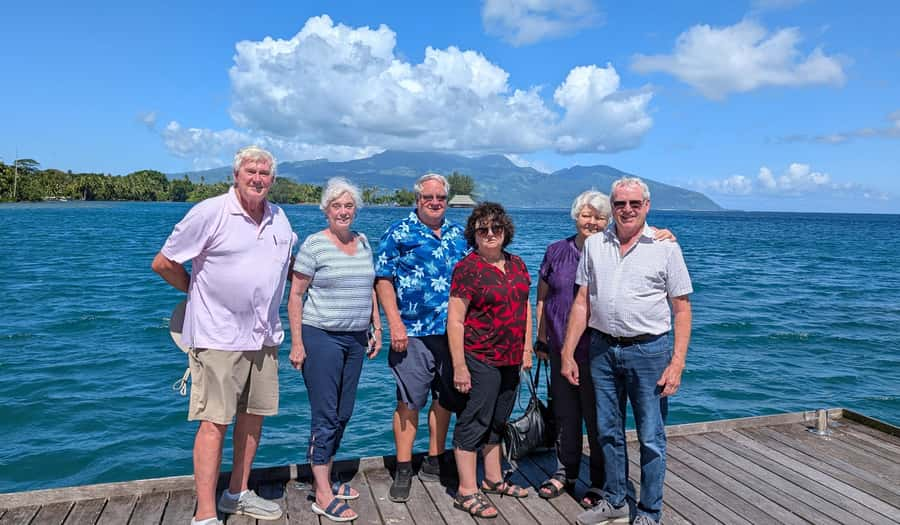
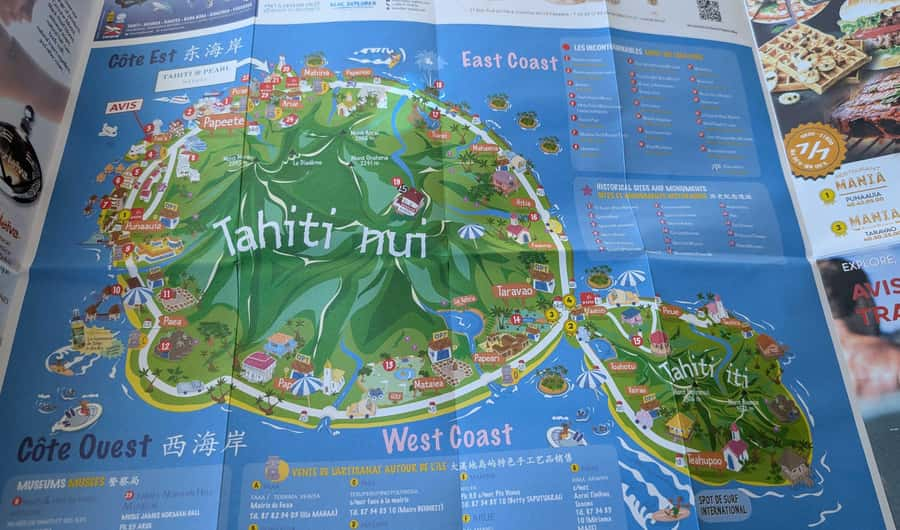
The main idea here is smart: don’t waste your limited time on one coast. You start from Pape’ete and work your way around to show the island’s different moods. Tahiti Nui tends to feel more urban-adjacent and “main island,” while Tahiti Iti adds a greener, more rugged feel—plus those iconic coastal viewpoints and shoreline moments.
What I like about this structure is that it keeps you oriented. You’re not just seeing places; you’re learning how Tahiti’s history, daily life, and geography connect. The day’s order is built around that: a sacred stop first, then caves and beaches, then gardens and viewpoints, and finally waterfall country before the historical finale at Pointe Vénus.
If you’re on your first full day in French Polynesia, this is a solid “get your bearings fast” experience. And because it’s private (up to 7 people), you can typically shape the rhythm a bit—asking questions and taking breaks when you need them.
You can also read our reviews of more private tours in Tahiti


Getting around in an air-conditioned private van with headsets
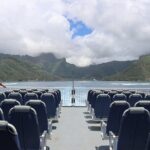
This is not a bus tour. It’s a private group in a fully licensed air-conditioned minivan with large panoramic windows, and you get bottled water on board. The headset system is a big deal in Tahiti’s traffic-heavy roads: it means you can hear the guide clearly without leaning forward or guessing.
The van pickup is flexible within Pape’ete: they’ll pick you up any place in Pape’ete between Punauiia and Mahina (with pickup also from the airport or cruise terminal, depending on where you’re staying). You get luggage assistance if you request it in advance.
Practical note: the itinerary mentions that stops can shift with weather and local factors like holidays or road work. That’s normal on an island. The good part is that your guide isn’t “winging it”—the plan is designed to cover the classics while adjusting around the day’s reality.
One more thing: no alcoholic drinks in the vehicle. It’s a small rule, but it affects the vibe. Plan on water and fruit, and save any adult drinks for later.
Ārahurahu Marae and Maraa Caves: the calm, sacred side of Tahiti
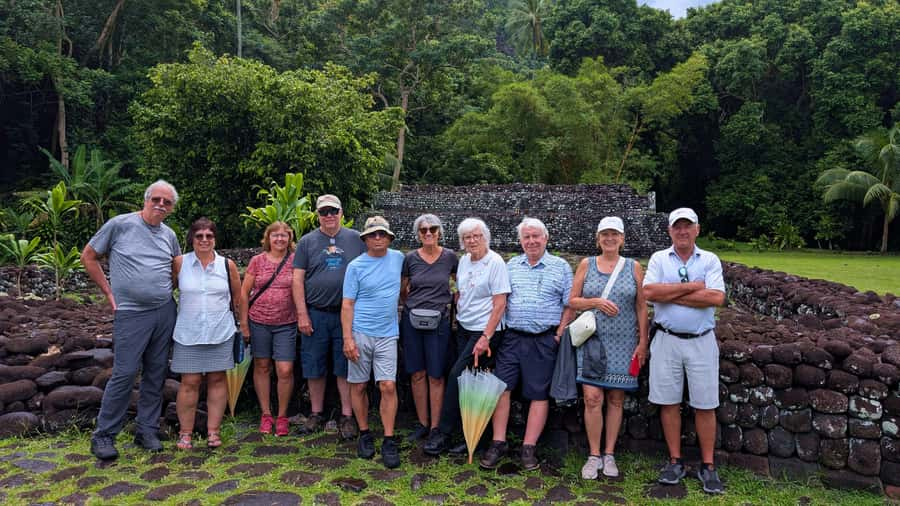
The day’s cultural backbone starts at Ārahurahu Marae. This is a stone ceremonial site tied to Polynesian spirituality, and the stop is guided (about 20 minutes with photo time). Even if you don’t know a lot about marae traditions, you’ll get the “why it matters” context. It helps you understand that Tahiti isn’t just beaches and waterfalls—it also has deep ceremonial heritage tied to community life.
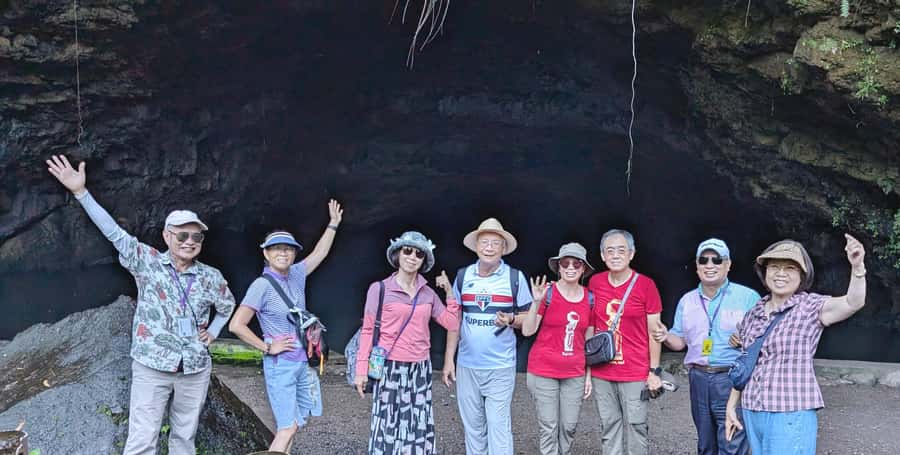
Right after that, you head to Maraa Caves (Grottes de Mara’a). Think cool air and water-filled grottoes surrounded by lush greenery. It’s a refreshing reset from sun and roadside humidity, and the timing works well because caves are most comfortable when you’re still energized from the morning.
The cave visit is short (around 15 minutes), but the point isn’t a long hike—it’s the contrast. You go from a sacred stone temple to a cool, watery natural space. That contrast is what makes the experience feel more complete than a “drive-by culture stop.”
Taharuu black-sand beach and Vaipahi Water Gardens
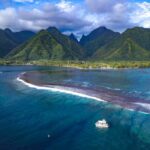
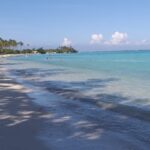
Next up is Taharuu Black Sand Beach, where the ocean energy becomes the main character. This is one of those places that’s instantly photogenic because it looks different from what most people expect in the Pacific. The black sand, waves, and sea breeze create a strong, dramatic feel—especially for anyone who likes surfing (it’s a favorite area for surfers).
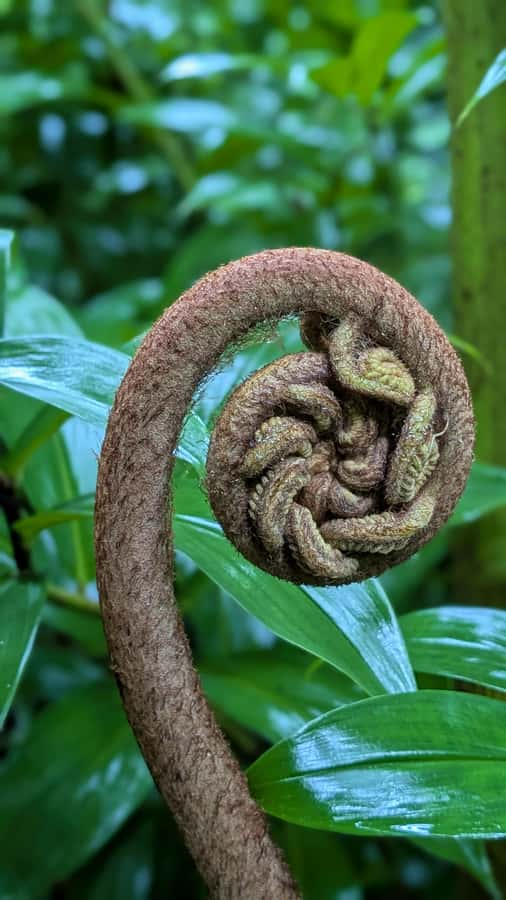
After that, you transition into softer territory: Vaipahi Water Gardens. Expect a botanical setting with clear streams and exotic plants. The time here is about 25 minutes, and it’s structured for slow walking and photos, not a strenuous trek. If you’ve been in tropical heat all morning, this is where the day starts to feel “human-scale”—a break you can actually enjoy.
A key detail: these stops are short, but they’re not random. Beach to gardens to lunch is a nice rhythm of salt air, shade, and sights. That means fewer “I’m rushing” moments and more “I get it” moments.
Lunch at the Paul Gauguin Museum restaurant with ocean views
At midday you stop for lunch at the Paul Gauguin Museum restaurant. Lunch is not included in the tour price, but the stop is timed for a comfortable 80 minutes—enough to eat without feeling like you’re sprinting to the next location.
This lunch stop is more than just a meal. It’s placed to give you a scenic pause, and that matters on a day with multiple driving segments. Also, it’s a chance to slow down and take in the Pacific setting without rushing your photos.
What to plan: bring a little cash or a card buffer for your lunch, and if you have dietary needs, ask the guide what the restaurant options generally look like before you order. The tour does provide seasonal fresh fruit when available, plus water on board, but fruit won’t replace a full lunch if you get hungry.


Taravao viewpoint and Phaeton Bay: anchorage views that anchor the day
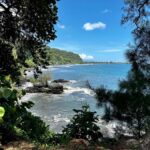
After lunch, the day shifts into “big view” mode with Belvédère de Taravao (about 40 minutes). This viewpoint is designed for panoramas—looking across Tahiti’s eastern and western coasts. It’s the kind of stop that helps you connect the dots between what you saw earlier (temples, caves, shorelines) and the island’s real shape.
You’ll also get perspective on Phaeton Bay, a known South Pacific anchorage where cruising boats shelter. Even if you’re not a boat person, anchorage views give you scale. You can see how Tahiti sits in the broader ocean world, not just as an island you drive around.
One practical tip: viewpoints can be breezy. Bring a light layer even if it’s warm—your comfort at the stop will affect how much you enjoy it.
Waterfalls and blowhole: Faaone double waterfall, Fa’aruma’i, and Arahoho

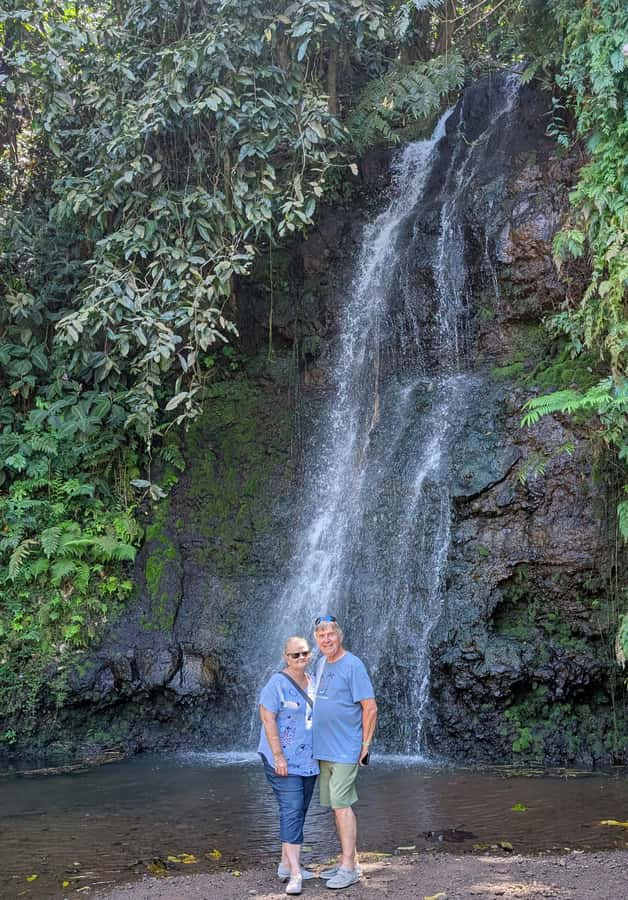
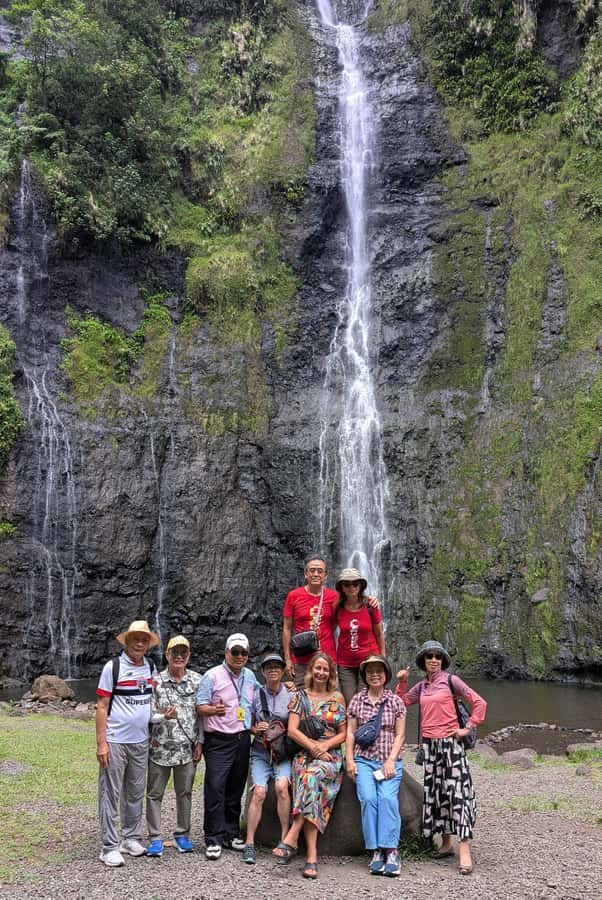
This tour earns its reputation on water. The highlight section calls out a relaxed, unhurried day featuring four stunning waterfall visits, and the itinerary supports multiple waterfall moments, including a double waterfall stop (Faaone) plus the Fa’aruma’i Waterfalls area (listed as Fa’aruma’i Waterfalls, with a mention of Tiarei lore).
Here’s why that matters: waterfalls are the most “Tahiti-only” feel in the whole route. You can find beaches almost anywhere. But this mix of tropical waterfalls—surrounded by greenery and fed by island rainfall—gives you the dramatic, story-like scenery people come for.
Right after the waterfall area, you head to Arahoho Blowhole. This is a different kind of ocean spectacle—more about sound, force, and timing than a walk-through sight. Expect a guided stop (around 15 minutes) with photo time. If waves are moving well that day, the blowhole can be one of the most memorable roadside moments.
A small travel detail I’d follow: wear grippy shoes and expect slick spots near water features. Even if the stops are brief, feet still need traction.
Pointe Vénus finale: black sand, Cook’s era stories, and Pomare connections
The day closes at Pointe Vénus, including guided tour and photo time (around 25 minutes). This stop includes cultural and historic context tied to Captain Cook’s voyages, the legend-era Mutiny on the Bounty, and the Pomare dynasty. It’s also a black sand beach setting, so you get the coastal “bookend” look after Taharuu earlier in the day.
This is where the day’s theme clicks. Earlier stops showed Polynesian spiritual heritage and nature-driven places. Pointe Vénus places Tahiti in the European-age story too—so you see how the island’s history layered over time.
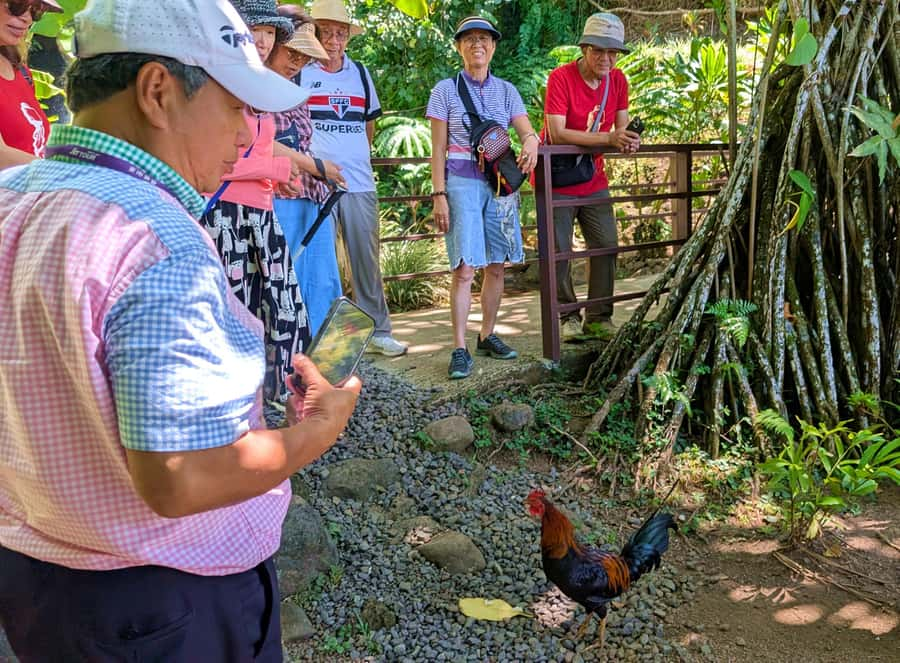
If you like learning through stories, guides often do a great job here. On past runs of this route, people have specifically praised guides like Max and Eric for clear explanations and good time management. Some guides also show practical kindness with small extras—like being ready with rain gear or help for animal-feeding moments at appropriate stops (for example, bread to feed freshwater eels and even chickens, when that’s part of the day’s encounters).
Price and included value: what you’re really paying for
At $861 per group (up to 7 people) for an 8-hour private tour, the price only makes sense if you treat it like a “whole day solution,” not just a list of stops. You’re paying for:
- Professional guide with live commentary
- Hotel/airport/cruise pickup and drop-off
- Fully private, air-conditioned transport
- Headset system
- Entrance fees
- Bottled water
- Fresh fruit when available
- Guided visits to marae, caves, beaches, waterfalls, and Point Venus
What’s not included is mostly what you’d expect: lunch and snacks (meal cost not included). So budget for your lunch at the Paul Gauguin Museum restaurant.
Also note: you’re not arranging multiple guides, multiple tickets, or separate rides. That alone can be a money-saver in Tahiti, where one “simple plan” often becomes several decisions.
Is it expensive? Yes. But if you’re traveling as a group and want the comfort of a private van plus a guide who keeps the day flowing, it’s a strong value.
Who should book this Tahiti Classical Coastal tour
Book this if you want a first-timer-friendly day that blends nature + culture without forcing you to drive. It’s a good fit for:
- Couples or families who want comfort and easy logistics
- People who hate wasting time on navigation and parking
- Travelers who want both Tahiti sides—Nui and Iti—in one go
- Anyone who loves waterfalls, caves, black-sand shoreline stops, and viewpoint panoramas
Skip it if you’re the type who wants long stays, slow pacing, and deep hiking. This is built for several high-impact stops. You’ll enjoy it most if you’re okay with short visits and moving from place to place during the day.
Should you book it?
If your goal is to see the major Tahitian icons in one day, this is a smart booking. The private comfort, headset clarity, and the way the route mixes marae, caves, gardens, black-sand beaches, waterfalls, and Pointe Vénus makes it feel like a real itinerary, not a random shuffle.
I’d book it if you’re traveling with 1–6 other people (so the per-person cost drops) and you’re excited by a day that moves. I wouldn’t book it if you already have your heart set on staying in one area for hours at a time.
FAQ
Where does the tour pick up in Tahiti?
Pickup is included from major hotels, the airport, and the cruise ship terminal. Within Pape’ete, they pick you up at any place between Punauiia and Mahina.
How long is the Tahiti Classical Coastal private tour?
The duration is 8 hours.
Is lunch included in the tour price?
Lunch is not included. There is an optional lunch stop at the Paul Gauguin Museum restaurant, and you’ll pay the meal cost separately.
How big is the group for this private tour?
It’s a private group with a maximum of 7 people per group.
What languages are available for the guide?
English and French are the default options regularly available. Russian and German may be available upon prior request, depending on the guide’s availability.
What’s included besides the guide and transportation?
Entrance fees to visited sites, bottled water on board, a headset system, and seasonal fresh fruit when available are included. Entrance fees and visits cover the marae, caves, black-sand beaches, waterfalls, and Pointe Vénus.
Are alcoholic drinks allowed during the tour?
Alcoholic drinks are not allowed in the vehicle.
Does the itinerary ever change?
Yes. The tour program may vary depending on weather and also due to road works, spot maintenance, public holidays, sport competitions, strikes, or demonstrations.
Can I cancel and get a full refund?
Yes. You can cancel up to 24 hours in advance for a full refund.