REVIEW · TAHITI
4×4 Safari HEREAKIMANU Tour in the Heart of Tahiti
Book on Viator →Operated by 4X4 SAFARI HEREAKIMANU TAHITI · Bookable on Viator
One rough road later, Tahiti feels brand-new. This 4×4 safari through the interior delivers jaw-dropping waterfall stops and hands-on cultural storytelling, often led by guides like Leonie and Tere. The tradeoff is simple: expect a seriously bumpy ride and plan your day accordingly if you’re prone to motion sickness or have back issues.
What you’re really paying for is access. You’ll go from the east coast’s black-sand beaches into Papenoo Valley, reach Caldera, visit Fare Hape, and then move toward the west side through a mountain tunnel with big views of Vaihiria (Tahiti’s only natural high-altitude lake). It’s not a comfy city tour, but it is a real Tahiti day.
In This Review
- Key Things That Make This Safari Worth Your Time
- Why This 4×4 Safari Feels More Like Tahiti Than a Drive-By
- The 8:30 Start and How the Day Really Flows
- East Coast Warm-Up: Papeno’o and Black-Sand Beach Country
- Papenoo Valley: Where the Terrain Changes and the Stops Matter
- Caldera Area and Fare Hape: Culture Meets the Mountain Scale
- The Tunnel to the West and Vaihiria’s High-Altitude Views
- Snacks, Lunch Reality, and What to Pack
- Guides Make the Difference: Leonie, Tere, Manua, and Temaeva
- Price and Value: Why $143.27 Can Be a Good Deal
- Who Should Book This Safari (and Who Should Skip It)
- Should You Book 4×4 Safari Hereakimanu in Tahiti?
- FAQ
- How long is the 4×4 safari experience?
- What time does the tour start?
- Is pickup offered, and does it end back at the same place?
- Is lunch included in the price?
- What food is included?
- How many people are in the group?
- What happens if weather is bad?
Key Things That Make This Safari Worth Your Time
- Small group size (max 8): better chances for questions and more personal guiding.
- East-to-west mountain route: you get the island from a totally different angle than the resorts.
- Frequent photo and info breaks: short stops keep the day moving without feeling rushed.
- Culture stops beyond scenery: Fare Hape village time adds context to what you’re seeing.
- Waterfall country energy: expect multiple stops where the falls are the star.
- Includes fruit snacks, not lunch: you’ll buy your own lunch during a supermarket stop.
Why This 4×4 Safari Feels More Like Tahiti Than a Drive-By
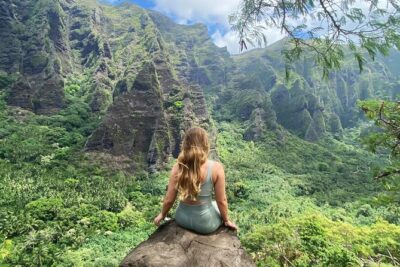
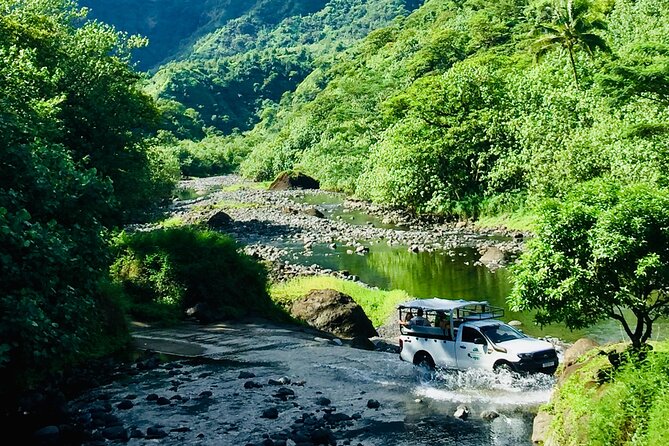
Tahiti’s interior doesn’t look like postcards, and that’s exactly why this day works. You trade “straight-line sightseeing” for mountain roads, river crossings, and valleys you can only reach with proper vehicles. The result is a sense of scale: you start near the east coast, then work your way toward the west, spending hours with changing terrain and weather.
Two things I think you’ll appreciate right away. First, the day is designed around short viewpoint pauses—the kind that let you take photos and actually hear what’s going on instead of staring out the window the whole time. Second, the guiding style is built for storytelling. Names like Leonie, Tere, Manua, and Temaeva show up in guest experiences, and the common thread is a focus on plants, local life, and how people interpret the landscape.
The main consideration is physical comfort. This is a rugged ride in an open-air safari-type truck, with rough tracks and potholes that can leave you sore. If you’re sensitive to bouncing, tell yourself up front that this isn’t a “sit back and relax” tour.
A few more Tahiti tours and experiences worth a look

The 8:30 Start and How the Day Really Flows
The tour starts at 8:30 am, and it returns you back to the meeting point. You’re out for about 8 hours, which matters because you’re committing to a full morning-to-afternoon window rather than a quick half-day.
Because the group is capped at 8 travelers, the pace feels more human than the big-bus pattern. You’ll still spend a lot of time in the vehicle—part of the point—but the frequent stops help break the day into manageable chunks. Also, you’ll want to be ready for shifting conditions: the route can include sun, shade, and rain, and your guide will adapt when the weather changes.
One more practical point: luggage isn’t supported. Pack light enough for a day bag and keep anything you need for comfort (water, sun protection, rain layer) easy to grab. If you’re used to storing things in a trunk like a normal car trip, plan for a different setup.
East Coast Warm-Up: Papeno’o and Black-Sand Beach Country
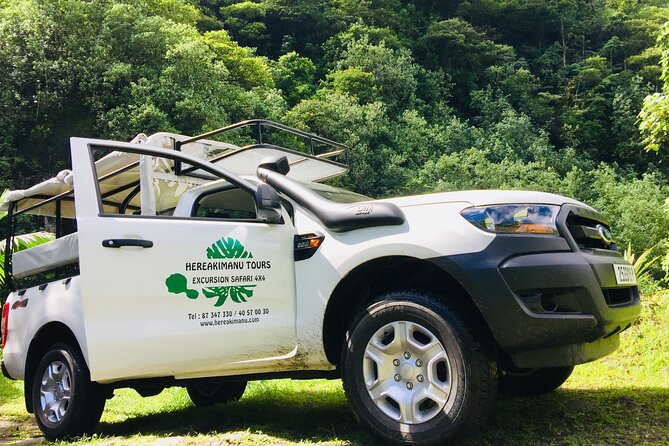
You begin on Tahiti’s east coast area around Papeno’o, where the vibe is surf culture and dark sand. This is a great opening because it sets expectations: the island is not just one kind of scenery. Even before the interior turns wilder, you’ll get those black-sand beaches and views that feel different from the smoother, more developed shorelines.
Expect short 5–10 minute stops for photos and info. That might not sound like much, but on a long day it prevents the “only stop is the bathroom” problem. You’ll also learn what to look for along the way—how the coast connects to the interior and why the valley route is worth the effort.
If you’re traveling with someone who loves photos, this early stretch is a good buy-in moment. If you’re the one who gets impatient with scenic detours, keep your eyes open here: the views you see on the coast become a contrast point for what you’ll find deeper in the mountains.
Papenoo Valley: Where the Terrain Changes and the Stops Matter
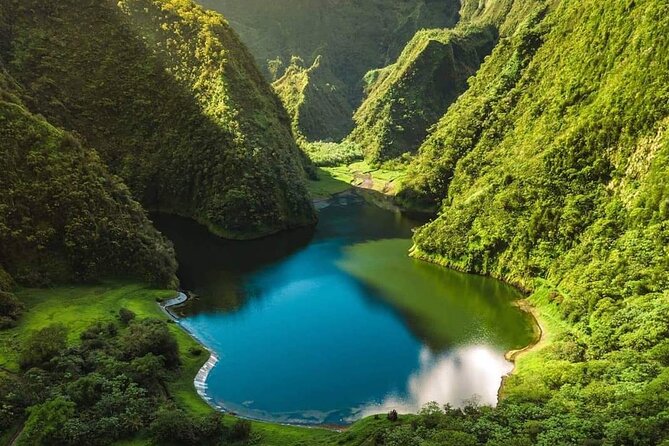
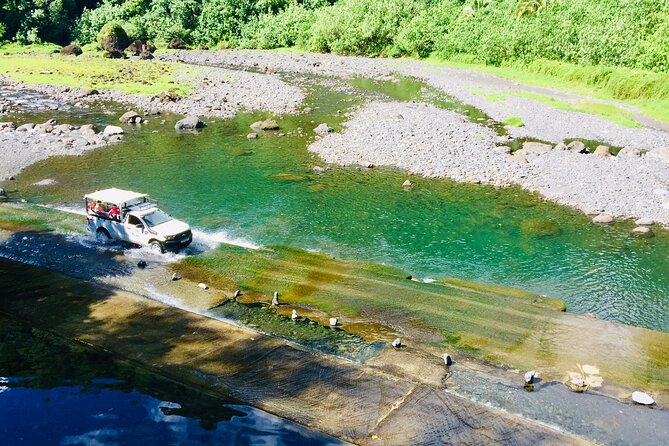
After the coast warm-up, the day shifts into the heart of Papenoo Valley. This is where you’ll feel the “4×4 safari” difference. Roads become unpaved, uneven, and more exposed to rainfall. The upside is huge: this is the section where the island starts looking wild in a way you won’t get from main roads.
Time-wise, this part is substantial (around 3 hours), and it usually means you’ll spend more time with the rhythm of the vehicle plus occasional viewpoint breaks. Those photo stops and explanations are doing real work here. They help you connect what you’re seeing—plants, river cuts, valley shapes—to daily life and local knowledge.
If you’re trying to plan your comfort, this is the segment where your body will notice the route the most. Bring motion-sickness prevention if you need it, and consider wearing shoes with grip. The day is worth it, but you should make it easier on yourself.
Caldera Area and Fare Hape: Culture Meets the Mountain Scale
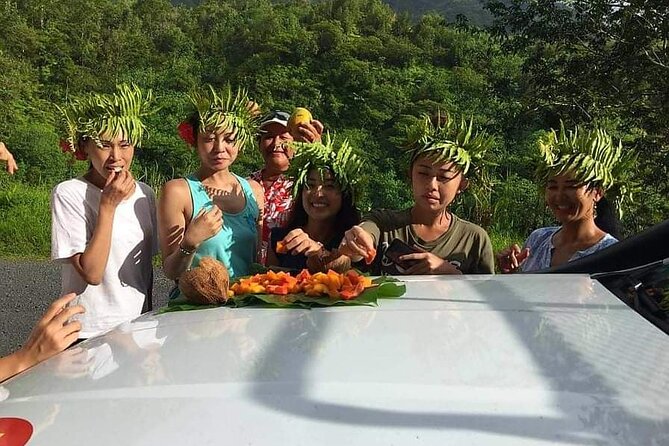
From the valley you reach the Caldera area, then continue to the authentic village of Fare Hape. This is one of the best “human moments” on the day because it shifts you from scenery mode into people-and-history mode.
Your Fare Hape stop is about 1 hour, which is just long enough to feel the place without turning it into a rushed checkbox. What you get here is the traditional-life context—how communities live and adapt in a landscape that’s beautiful but not always easy to move through. This kind of stop matters because it stops the day from being only about photos.
A number of guides are praised for adding culture and nature knowledge during these breaks. Guests mention guides sharing history, plants, and daily life, and some specifically call out the way the guide points out birds and features you might otherwise miss. If you’re a nature lover, this is where the tour earns its seriousness.






The Tunnel to the West and Vaihiria’s High-Altitude Views
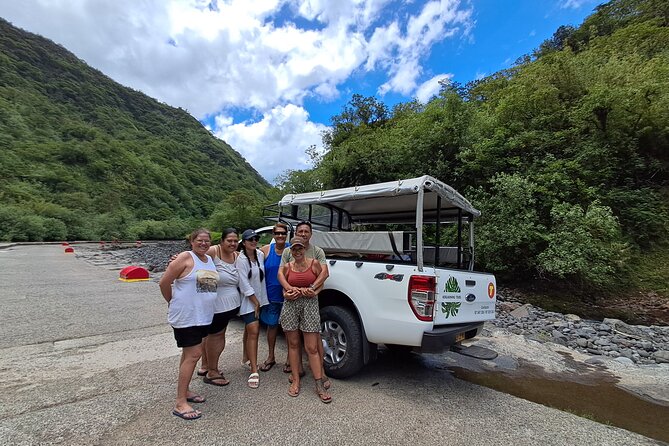
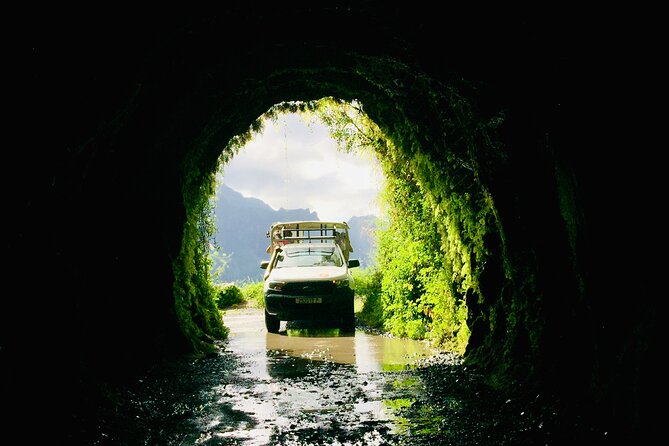
Later, the adventure includes a mountain tunnel that connects the east side to the west coast. This part is more than just a drive segment. In clear conditions, the payoff is the view toward Vaihiria, described as Tahiti’s only natural high-altitude lake.
This is where the day often clicks into place: you’ve been bouncing through the interior, and then you get a big moment that feels like a reward. The tunnel crossing also emphasizes the route’s character—this isn’t a quick pass between two points. It’s a journey across Tahiti’s interior edges.
After the tunnel, you continue across the island (with additional time allocated for the later portion of the day, about 3 hours). You’ll likely see waterfalls and wet-weather scenery depending on the day. Multiple guests call out waterfalls gushing down the mountains, and that fits what this region can deliver when the skies open.
Snacks, Lunch Reality, and What to Pack
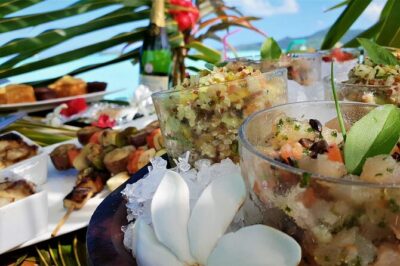
Here’s the food truth: the tour includes snacks—notably a platter of local fruits. Lunch isn’t included, but you’ll stop at a supermarket so you can buy what you need.
That setup is actually pretty smart for value and flexibility. You’re not locked into a single boxed meal. If you need water, a snack you like, or something more filling for lunch, you can get it during the supermarket stop. Just budget for it, because $143.27 per person covers the safari experience—not a full meal.
What I’d pack for comfort:
- A light rain layer or poncho (tropical weather changes fast)
- Sun protection (hours are outdoors with varying light)
- Solid shoes with grip
- A small day bag since luggage isn’t supported
- Water and any personal comfort items, since you’ll be in the vehicle a lot
If you’re the sort of person who gets stiff on long car days, this tour can turn that into an issue. Plan for “today is rough-road day,” then you’ll be pleasantly surprised when the viewpoints make up for it.
Guides Make the Difference: Leonie, Tere, Manua, and Temaeva
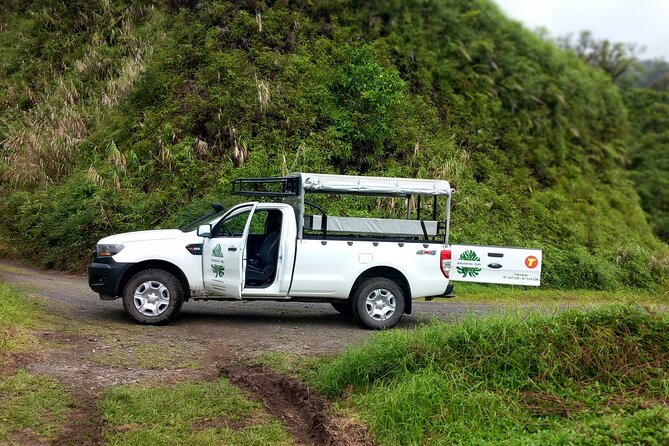
A big reason this safari earns such strong ratings is how the guides show up. Names like Leonie, Tere, Manua, and Temaeva appear in guest stories, and they’re described as professional drivers who also explain what you’re looking at—history, culture, and plants.
Some guest notes also mention extra touches like music and dance moments. One person describes ukulele and singing, and another mentions Tahitian dances as part of the cultural storytelling. You don’t need to think of this as a staged performance. It’s more like the guide using every suitable moment to add context to the place around you.
One practical takeaway: if you care about language, don’t assume your exact language will be available. Some experiences describe multilingual guiding across French, English, and other languages, while others mention only certain languages being used. If language matters a lot to you, message ahead and ask what to expect.
Price and Value: Why $143.27 Can Be a Good Deal
At $143.27 per person, this isn’t a cheap excursion—but it also isn’t trying to be one. You’re paying for:
- a full 8-hour day in the interior,
- 4×4 transport on rough tracks,
- expert guiding and multiple viewpoint stops,
- and included fruit snacks.
Compared to paying for a standard city tour, the value is in the access. Getting into Papenoo Valley, Fare Hape, and viewpoints tied to Vaihiria takes more than a bus ride. It takes the capability to handle narrow gravel roads, potholes, and weather changes.
The cost that’s not included is predictable: you’ll buy your own lunch and drinks at the supermarket. If you plan for that, the overall day still feels like a solid deal because you’re covering a lot of ground and getting cultural context, not just driving.
Who Should Book This Safari (and Who Should Skip It)
This tour is best for you if:
- You want to see the interior of Tahiti, not just the coast
- You like nature stops and learning what you’re seeing
- You’re comfortable with long vehicle time
- You enjoy small group tours (max 8 people)
You should think twice if:
- You’re prone to motion sickness
- You have back problems or are advised not to ride on rough terrain
- You need a totally smooth, low-impact day
The tour itself signals moderate physical fitness is expected. The rough roads aren’t a surprise detail—they’re the point. If you can handle that, you’ll likely love how the day feels like an authentic mountain outing rather than a polished attraction.
Should You Book 4×4 Safari Hereakimanu in Tahiti?
If your goal is one standout day in Tahiti that goes beyond beach time, I’d book it. The combination of waterfalls, Papenoo Valley access, Fare Hape culture time, and the Vaihiria viewpoint route is a strong package for the price—especially when the guide makes the day feel personal, like Leonie, Tere, Manua, or Temaeva described in guest experiences.
But go in with the right expectations. This is a rugged safari with a bumpy ride. Bring your rain gear, plan for lunch purchases, and give yourself permission to enjoy the journey even when it’s a little uncomfortable.
If you want, tell me your travel dates and whether you’re worried about motion sickness or rough roads, and I’ll help you judge if this day fits your style.
FAQ
How long is the 4×4 safari experience?
It runs for about 8 hours.
What time does the tour start?
The start time is 8:30 am.
Is pickup offered, and does it end back at the same place?
Pickup is offered, and the activity ends back at the meeting point.
Is lunch included in the price?
No. Lunch and drinks are not included, but the tour stops at a supermarket so you can buy what you need.
What food is included?
You’ll be offered snacks, including a platter of local fruits.
How many people are in the group?
The tour has a maximum of 8 travelers, and a minimum of 3 passengers is required to run the tour.
What happens if weather is bad?
This experience requires good weather. If it’s canceled due to poor weather, you’ll be offered a different date or a full refund. In case of adverse weather or force majeure, an alternative such as a date change, circuit change, or refund may be offered.