REVIEW · TAHITI
Discovery of Tahiti Nui Island
Book on Viator →Operated by Taina Tahiti Tours · Bookable on Viator
Black sand, caves, and a lighthouse in one loop. This half-day Tahiti Nui tour strings together island history, geology, and sea views, with highlights like Te Fare Iamanaha and the cool-water Mara’a Grotto. I also like how it’s built for real sightseeing (not just driving) with short stops at iconic places, so you get a strong overview of Tahiti’s north, west, and interior valleys. One drawback to plan for: on cruise-heavy days, pickup times and finishing time can shift, which can affect whether you catch the lighthouse in classic sunset light versus later.
For me, the best value is the mix of included touring and small-group feel: you get an air-conditioned vehicle, a guide, and bottled water, plus the island’s key stops without paying extra at every location. The group max is 7 travelers, which helps the stops feel more personal, and it’s convenient if you’re short on time in Tahiti. Still, with only about 5–6 hours total and no lunch included, you’ll want to eat before you go (or plan a quick bite after), and you should be ready for moderate walking at a few sites.
In This Review
- Key highlights you’ll care about
- A Tahiti Nui circle route: what 5–6 hours really covers
- Te Fare Iamanaha museum: history that sets your compass
- Mara’a Grotto caves and Taharu’u black-sand beach: two west-coast textures
- Vaipahi Water Gardens: plants, water, and a legend
- Faarumai Valley waterfalls and the Papenoo surf coast drive
- Point Venus lighthouse: the north-coast finale with real history
- Price and value: what $115 includes (and what you should budget)
- Logistics and timing: how cruise days can change your experience
- Who this Tahiti Nui tour fits best (and who should rethink)
- Should you book Discovery of Tahiti Nui Island?
- FAQ
- FAQ
- How long is the Tahiti Nui island tour?
- Where does the tour start and end?
- Is pickup offered?
- What’s included in the price?
- Is lunch included?
- How much walking is involved?
- Are there any admission fees for stops besides the museum?
- What’s the maximum group size?
- Does the tour require good weather?
- Can I cancel for a full refund?
- Is this tour suitable for reduced mobility?
Key highlights you’ll care about
- Te Fare Iamanaha museum with renovated 2023 sea views: a focused history stop that grounds everything else you’ll see.
- Mara’a Grotto’s three fresh-water caves: cool, shaded pools with ferns and moss overhead.
- Taharu’u black-sand beach: a practical surf-and-swim spot on the west coast of Tahiti.
- Vaipahi Water Gardens: botanical water plants plus the remains and legend tied to the area.
- Faarumai Valley waterfalls (Vaimahuta is the easy one): three waterfalls feeding from different watersheds.
- Point Venus lighthouse and black-sand beach: the historic north-coast stop that often becomes the photo finale.
A Tahiti Nui circle route: what 5–6 hours really covers
This is a true circle-island day. Tahiti has one main ring road, so the drive pattern is simple: you spend your time moving along the coast, then cutting in to specific sites. The tour runs about 5 to 6 hours, with stops that are mostly 15–40 minutes long. That’s short enough to fit a lot, but long enough that you won’t feel like you’re just being dropped at a curb.
The vehicle matters here. The tour is designed for a maximum of 7 travelers, so you’re typically not packed like a cattle car. Still, Tahiti’s cruise days can change the game. Some people have reported the vehicle size shifting due to crowding and logistics, so go in with a flexible mindset if your date lines up with a major ship day. In plain terms: the sites are the point, but the timing can wobble.
If you’re doing this as a cruise shore excursion, it’s a smart use of time. You’ll get a broad sense of Tahiti Nui without committing to a full day trip. And if you’re staying in Papeete only briefly, the meeting point at the Tourist Office on Bd de la Reine Pômaré makes it easier than hunting down a pickup elsewhere.
You can also read our reviews of more tours and experiences in Tahiti.


Te Fare Iamanaha museum: history that sets your compass
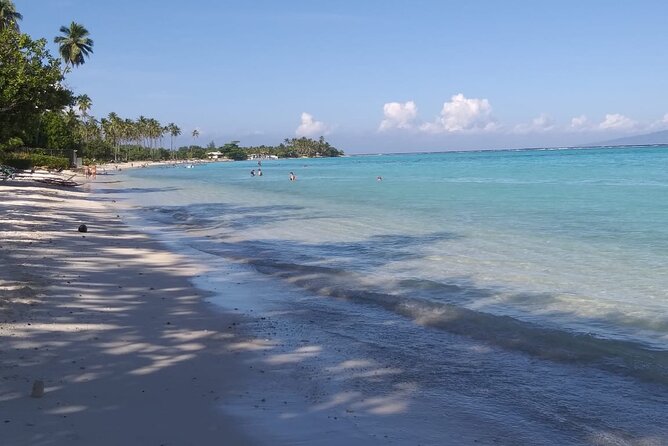
Stop 1 is Te Fare Iamanaha – Musée de Tahiti et des Iles (often called Te Fare Iamanaha). It’s built for understanding how French Polynesia developed, from early settlement through changes in customs over time. Admission is included, and you get about 40 minutes—enough time to learn without turning your day into a classroom.
What I like about this first stop is the pacing. It’s a history-and-culture foundation before you start bouncing between caves, gardens, and waterfalls. You’ll also see why the museum is more than a room of artifacts: it sits with a garden and sea views, so you get a break from the typical “museum box” feel. The renovation in 2023 is also worth noting; the place is described as newly refreshed and pleasant to visit.
The one practical caution: plan your energy. Forty minutes sounds easy, but it’s your first stop of the day, and museum floors and paths can be a bit uneven in places. Wear comfortable shoes, then shift gears for cooler, more outdoorsy stops next.
Mara’a Grotto caves and Taharu’u black-sand beach: two west-coast textures
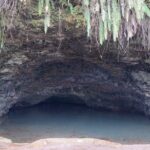
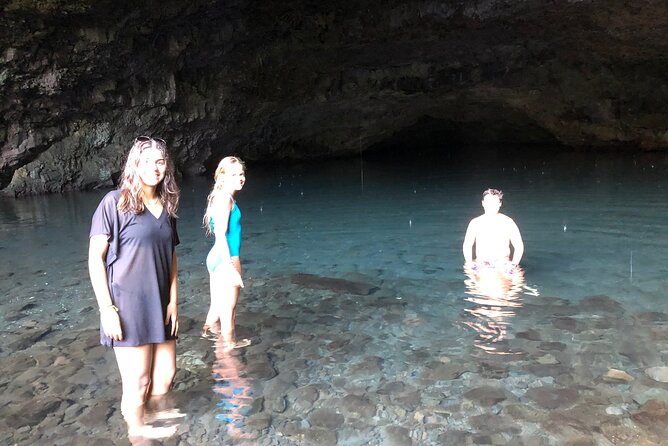
Next comes Mara’a Grotto, about 15 minutes. This is one of those “how is this real” stops. The site includes three natural caves carved into rock, and water pours in steadily to form fresh, clear pools. You’ll notice the ceiling has hanging vegetation—ferns, moss, and that soft green shade that makes the cave feel like it’s been waiting for you.
The time here is short on purpose. You don’t need an hour to appreciate the main features: the caves, the water, and the plant life that grows where light and moisture meet. But do give yourself a little extra attention for photos without rushing—this is one of the best spots for calm, cool atmosphere.
Then you’ll move to Taharu’u Beach, also about 15 minutes. This one is famous for its black sand on the west coast (Papara commune). What makes it useful, not just pretty, is that it’s described as a surfer-friendly area: good conditions for swimming and surfing, especially for people learning or already experienced.
A real-world tip: black sand can heat up fast. If you plan to sit or walk around, bring a light layer or consider shoes you don’t mind getting sandy. And if you’re visiting when there are active surfers, be mindful near the water’s edge—this isn’t a quiet beach with zero action.
Vaipahi Water Gardens: plants, water, and a legend
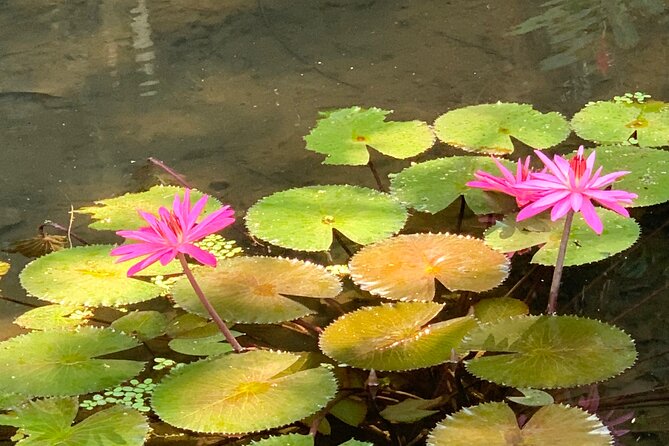
Stop 4 is Vaipahi Water Gardens (about 30 minutes). This isn’t only “pretty plants.” You’ll be able to observe botanical species and water plants, and there are also remains from the past tied to a legend about the place.
I love this stop because it slows the day down. After caves and beaches, gardens can feel like a reset button. It’s also a great contrast to the dramatic geology you’ll see at Mara’a and later at the waterfalls. Here, the story is how water shapes growth and how people connected a landscape to meaning.
Because it’s a garden setting, expect a bit more foot movement than at a viewpoint-only stop. You’ll get the most out of this if you take it at a relaxed pace instead of trying to “win the garden” in 10 minutes.
Faarumai Valley waterfalls and the Papenoo surf coast drive
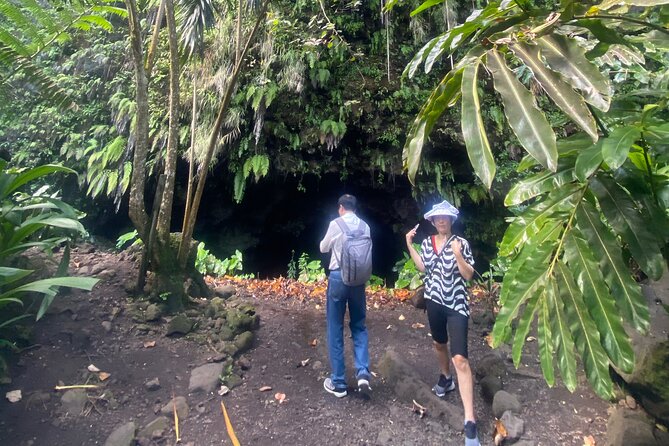
When the tour turns toward the interior and rugged stretches of coastline, you’ll pass parts of the wild coast and go by surf spots of Papenoo. That drive time matters because it’s part of what gives the tour its variety. You’ll go from ocean-edge stops to a valley setting where water becomes the main character.
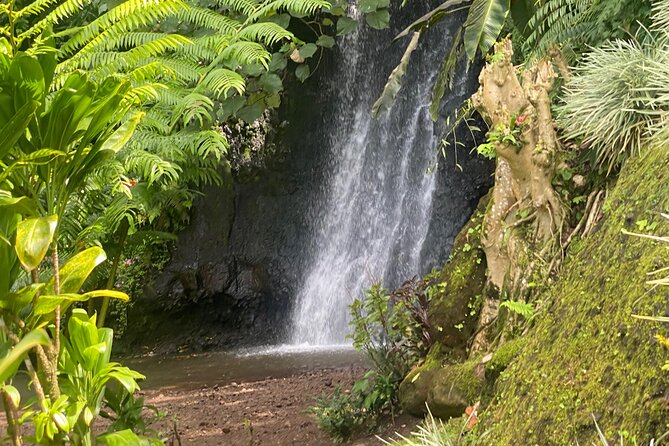
Stop 5 is Faarumai Waterfalls in the Faarumai Valley (about 15 minutes). There are three waterfalls, coming from three different watersheds. The most accessible one within a short walk is called Vaimahuta, described as an 80-meter waterfall.
Here’s the honest trade-off: waterfall stops are timed tight. You’ll have time to see it and enjoy the view, but not to do a long hiking loop. If you love waterfalls, you’ll probably wish you had more time. If you’re okay with a “see it properly and move on” visit, it works well inside a half-day format.
Wear shoes with grip. Even if the walk is only a few minutes, a waterfall area can mean slick spots, damp ground, and plenty of mist.






Point Venus lighthouse: the north-coast finale with real history
The final stop is Pointe Venus (Point Venus), about 20 minutes. It’s located on the north of Tahiti, in Mahina. The two things it’s known for are clear: a historic lighthouse and a black sandy beach.
Why this stop lands well at the end: after a full circle of Tahiti Nui, the north coast gives you a last, satisfying “anchor” point. You’re seeing another face of Tahiti—again tied to water and coastline—but with that added layer of historical significance from the lighthouse.
Timing can matter. On some days—especially when the itinerary runs late due to cruise traffic—you might arrive after the best light for photos. That said, even later in the day, the lighthouse setting and black sand beach still make Point Venus a strong final chapter. If your schedule is tight, this is also a stop that’s easy to understand quickly: you look, you take in the sea and the structure, and you’re done.
Price and value: what $115 includes (and what you should budget)

At $115 for about 5–6 hours, the value comes from what’s bundled rather than any one “wow” moment. You get:
- Air-conditioned vehicle
- Guide
- Bottled water
- All fees and taxes
- Mobile ticket
- Museum admission included at Te Fare Iamanaha
Most other stops are noted as admission free, which keeps the day from turning into surprise add-ons. That’s a big deal on islands: fees can add up fast, especially when you’re trying to do multiple sites in a half day.
What isn’t included? Lunch. Also, while bottled water is provided, you’ll still want to plan for snacks if your body runs on actual food, not tourism enthusiasm.
So my practical advice: treat this as a “drive + stops” sightseeing day. If you’re hoping for a long beach lounge session, this isn’t the right match. If you want an efficient overview with genuinely varied environments—museum, caves, black sand beach, water gardens, waterfalls, lighthouse—then the price makes sense.
Logistics and timing: how cruise days can change your experience
This is where you should be a little strategic. The day is designed as a small-group, scheduled route, but Tahiti can get chaotic when cruise ships dock in large numbers. Some guests have experienced later pickups, vehicle changes (from a small-group setup to larger transport), or missed elements when timing compresses.
You don’t need to panic. Just plan for buffers:
- If you’re on a cruise shore excursion, assume the day could run behind if traffic is heavy.
- Keep your day flexible and avoid booking anything tightly timed right after the tour.
- Use the tour day to see the main sites, not to hit a perfect sunset plan with zero margin.
One more tip: bring some patience. The stops are worth it, but this type of tour is only as smooth as the timing around the port and road conditions.
Who this Tahiti Nui tour fits best (and who should rethink)
This tour is best for you if you want a wide overview of Tahiti Nui without car rental stress. It’s also a solid choice if you only have one half-day and you want history, nature, and iconic beaches in a single loop.
You should be comfortable with moderate physical fitness. The tour is not described as demanding, but you will be walking at a museum and moving around outdoor sites like caves and waterfalls. Wear supportive shoes and keep water handy.
Not recommended for reduced mobility, unless you arrange a private service. Since the stops include outdoor areas, uneven ground, and valley/water settings, it’s a situation where accessibility details matter more than “how far is it, really?”
Should you book Discovery of Tahiti Nui Island?
I’d book it if your goal is an efficient, varied Tahiti Nui overview: Te Fare Iamanaha for context, Mara’a Grotto for cool caves, Taharu’u for black sand and surf culture, Vaipahi Water Gardens for plant-and-water calm, Faarumai for a real waterfall payoff, and Point Venus to close with lighthouse history.
I’d hesitate if:
- You’re extremely schedule-sensitive (like you must be somewhere at a specific time regardless of traffic).
- You need a low-walking day with zero uneven terrain.
- Your travel date lines up with heavy cruise congestion and you can’t tolerate timing shifts.
If you can flex the day by even a little, this tour delivers what you want from Tahiti in a half-day: multiple environments, clear “here’s what you’re looking at” guidance, and a route that gives you your bearings fast.
FAQ
FAQ
How long is the Tahiti Nui island tour?
It runs about 5 to 6 hours.
Where does the tour start and end?
It starts at the Tourist Office, 91 Bd de la Reine Pômaré, Papeete 98716, French Polynesia, and ends back at the same meeting point.
Is pickup offered?
Yes, pickup is offered.
What’s included in the price?
The price includes an air-conditioned vehicle, a guide, bottled water, all fees and taxes, and admission at Te Fare Iamanaha. The tour also uses a mobile ticket.
Is lunch included?
No, lunch is not included.
How much walking is involved?
The tour is listed for moderate physical fitness. You should expect some walking at outdoor sites like the caves, beach, gardens, and waterfall area.
Are there any admission fees for stops besides the museum?
The museum admission at Te Fare Iamanaha is included, while other listed stops are marked as admission free.
What’s the maximum group size?
The experience has a maximum of 7 travelers.
Does the tour require good weather?
Yes. The experience requires good weather, and if it’s canceled due to poor weather you’ll be offered a different date or a full refund.
Can I cancel for a full refund?
Yes—free cancellation up to 24 hours in advance for a full refund.
Is this tour suitable for reduced mobility?
It is not recommended for people with reduced mobility. If that applies to you, the guidance is to contact the provider for a private service.