REVIEW · TAHITI
Private Tours of Tahiti by Lydia. Full or Half Day
Book on Viator →Operated by Tours of Tahiti · Bookable on Viator
Tahiti makes more sense with context. A private day with Lydia turns the island into a story, with stops that cover Polynesian daily life, customs, and the island’s geology, plus practical sights like black-sand beaches and waterfalls. I love that the tour feels genuinely personalized to your interests and that Lydia can explain what you’re seeing in plain language. One possible drawback: it’s not a sit-by-the-pier style outing, so if you’re chasing pure beach time, the learning-heavy pace may feel like more than you bargained for.
You’ll start with pickup and a smooth private-van day, with bottled water and likely snacks included. Many of the stops are free to enter, which helps the value, but it’s also a route that depends on good weather and getting in and out of the vehicle.
In This Review
- What Makes This Private Tour Different (And Worth Your Time)
- Key Highlights to Look Forward To
- Full Day vs Half Day: How the 5- vs 8-Hour Plan Feels
- Price and Value: What $650 Per Group Buys You
- Point Venus and Parc de Tahara’a: First Views, Real History
- Arahoho Blowhole and Cascade Vaimahuta: Ocean Power and Year-Round Water
- Vaipahi Water Gardens and the Lava-Tube Cave: Sacred Water With a Cooling Reward
- ‘Ārahurahu Marae and Te Fare Iamanaha: Sacred Sites and Objects
- Teahupoo and Papara: Famous Surf Waves and Everyday Learning
- How Lydia Keeps It Private, Flexible, and Not Rushed
- Smart Planning Tips for a Smooth Tahiti Day
- Should You Book Private Tours of Tahiti by Lydia?
- FAQ
- How long is the full-day tour?
- How long is the half-day tour?
- What does the tour cost?
- Do you get pickup in Papeete?
- Are drinks included?
- Is the Te Fare Iamanaha museum included?
- Are there entrance fees for the stops?
- What if the weather is bad?
- What is the cancellation policy for a refund?
- Is the tour recommended if I can’t enter the vehicle on my own?
What Makes This Private Tour Different (And Worth Your Time)
Lydia’s approach is built on lived experience. She has been living in Tahiti since 1993 and married her Polynesian husband, Coco, in 1995. Even her family name, Faaterehia, is tied to the idea of guiding, and you can feel that intent in how the day is paced.
This isn’t just a checklist of views. You’ll get context: how Polynesians historically used places, why certain natural features matter, and how the island’s plants and animals fit into everyday life. It also helps that the tour is private, so you can ask questions and stay with what you actually care about.
And yes, the day is designed for real sightseeing. You’ll move through multiple environments—coastline, cliffs, waterfalls, sacred sites, and surf areas—so you don’t leave Tahiti thinking you saw only one kind of place.
Key Highlights to Look Forward To
- A guide with deep local roots: Lydia has lived in Tahiti since 1993 and guides with a personal connection to Polynesian culture.
- A flexible route with clear pacing: The number of stops adapts to full-day vs half-day time, without turning into a rushed blur.
- Big variety in one day: black-sand history, ocean blowholes, year-round waterfalls, sacred water gardens, and Teahupoo.
- Most stops have no entry fee: bottled water is included, and many attractions don’t require paid tickets.
- Surf spots, not just viewpoints: Teahupoo for famous waves and Papara for a more local surf vibe.
You can also read our reviews of more private tours in Tahiti


Full Day vs Half Day: How the 5- vs 8-Hour Plan Feels
Full-day tours run about 8 hours (sometimes 9), while half-day tours run about 5 hours. The big practical point is how many different “themes” you can fit in. On the full day, you have time to include Teahupoo and still cover multiple inland stops like waterfalls and sacred water sites.
On a half day, you’ll likely get a tighter slice—fewer stops, but still with the same style of explanation. If you’re wondering how to choose: the half day is often best when you’re short on time and want the main highlights near Papeete and the coastline. The full day is the better pick if you want to feel how diverse Tahiti can be in a single outing.
Either way, the tour is designed to stay educational without feeling like a classroom. The stops are short, and Lydia uses the drive time to connect dots: geology to settlement, plants to daily use, and history to the places you’re standing in.
Price and Value: What $650 Per Group Buys You
This tour costs $650 per group for up to 8 people. That pricing structure can feel steep if you’re thinking per person—but it often becomes a bargain once you split it. With a full group of 8, you’re looking at about $81 per person for a private guide and a full day’s route across multiple sites.
What helps the value even more is what’s included:
- bottled water (and breadfruit chips or fruit if available)
- professional guiding
- many stops that don’t require paid admission
On top of that, you’re not paying for a “generic loop.” You’re paying for someone who can explain what’s around you and adjust the plan based on your time and interests.
There’s one optional add-on: Te Fare Iamanaha (The House of Treasures) is not included. If you want that museum layer, you’d plan for the local admission cost when requested.
Point Venus and Parc de Tahara’a: First Views, Real History
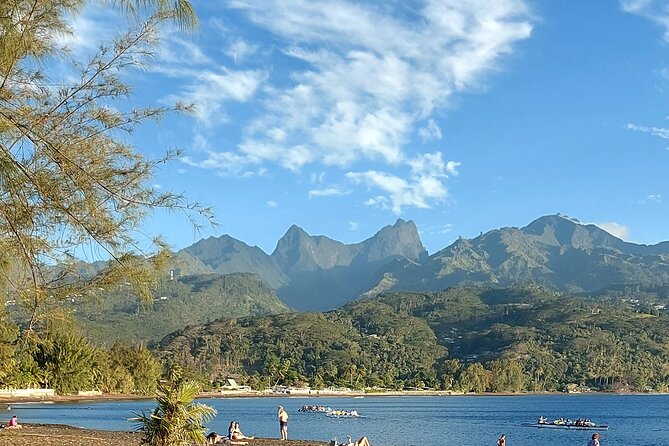
Your day often starts at Point Venus in Matavai Bay. This is where European navigators stopped when they arrived on Tahiti in 1767. Even if you’ve never heard the details before, Lydia’s explanations help you see the site as more than a pretty shoreline. It’s a meeting point in Tahiti’s long story.
You’ll also get a practical stop built in: there’s an arts and crafts outlet nearby. So you can pick up gifts that feel connected to place, not the usual airport version of souvenirs.
Next up is Parc de Tahara’a, a viewpoint famous for how far it reaches. Lydia’s favorite use of context here is how the view links places: you can look across Matavai Bay and take in Moorea in the distance as well as Papeete. Capt. Cook even compared this look to what he called One Tree Hill, which gives you a quick mental anchor for why visitors have always cared about this spot.
This pair of stops is a smart early move. You get history right away, then you zoom out to understand geography. That makes the rest of the day easier to follow.
Arahoho Blowhole and Cascade Vaimahuta: Ocean Power and Year-Round Water
Tahiti has a talent for making “simple” roadside stops feel dramatic. Arahoho Blowhole is one of those. The blowholes are linked to ocean swells. Lydia explains how the area used to behave before changes were made—before the tunnel built in 2010, the ocean’s force could even blow onto the road.
Now, the old road is turned into a park. You can feel the strength of the ocean through the motion and sound. It’s one of those stops where you don’t need to stare at your phone for long, because the place does the work for you.
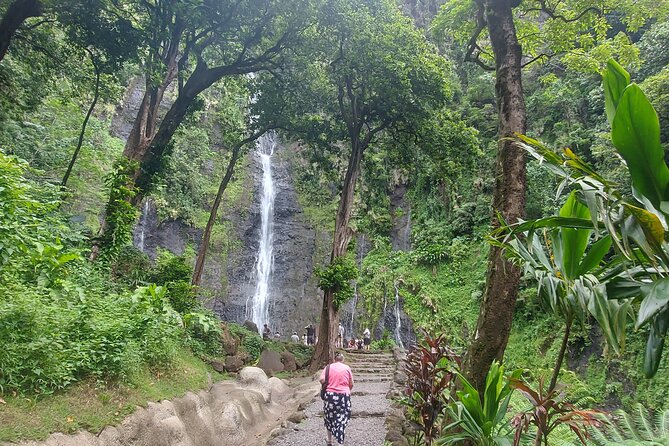
Then comes Cascade Vaimahuta, one of three waterfalls in the Faarumai valley. The key detail is accessibility: it’s the easiest to reach and it’s a permanent waterfall that flows all year and never dries up.
That matters for your planning. Instead of crossing your fingers for seasonal water, you’re heading to a waterfall with a reputation for consistency. If the weather is good, this stop is often one of the most satisfying “walk a little, then look around” moments of the day.


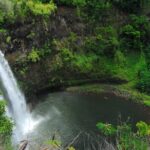



Vaipahi Water Gardens and the Lava-Tube Cave: Sacred Water With a Cooling Reward
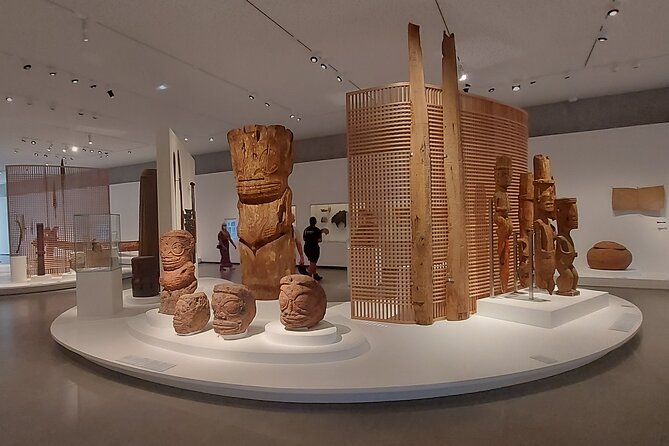
Water on Tahiti isn’t just scenery. At the Water Gardens of Vaipahi, you’ll learn that the area was once sacred for the Teva clan and used for spiritual purification. Lydia points out that even today, Polynesians still respect the waters.
This stop isn’t massive. You’ll see a small waterfall and multiple pools, and you’ll have a chance to connect the setting to living culture rather than treating it like a theme park. The pools also hold fish—tilapia and koi carp—so the place has a gentler, calmer feel than the blowholes.
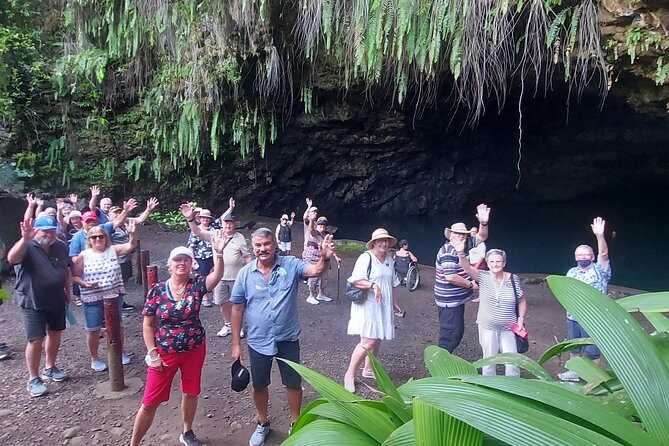
After that, the tour includes a geological curiosity: an old lava tube that’s now filled with fresh water due to natural springs in the area. Swimming is forbidden, but the water can be refreshing even without getting in. It’s a nice “cool down” stop on a warm day, and it adds real variety to the route because it’s not just a lookout.
One practical consideration: this part of the day can involve slick surfaces around water features. Comfortable shoes matter more than you might think.
‘Ārahurahu Marae and Te Fare Iamanaha: Sacred Sites and Objects
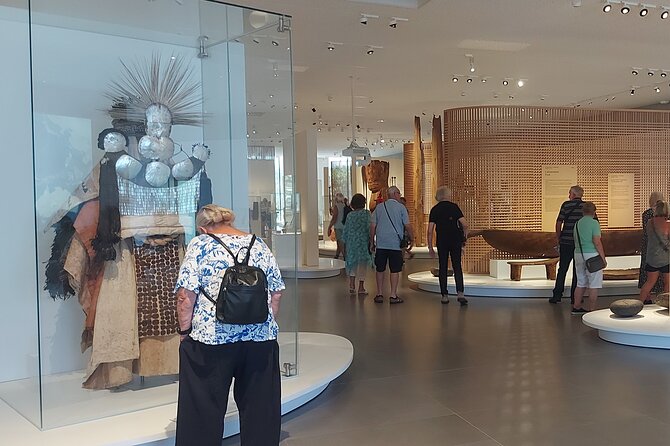
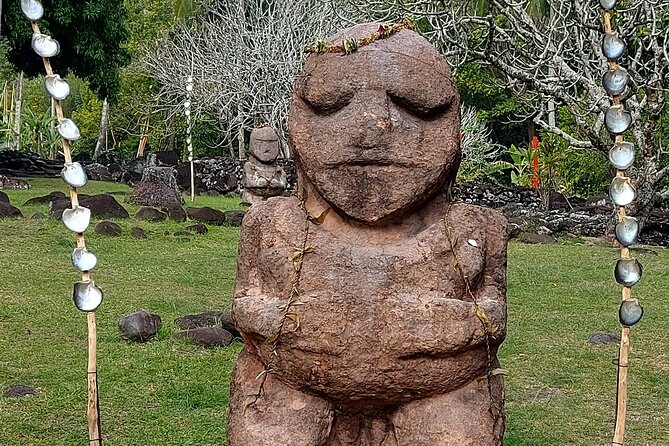
Tahiti’s sacred spaces can feel quiet in a way that photos don’t capture. At ‘Ārahurahu Marae, you’ll visit a site used by Polynesians to worship their gods. Lydia also explains an important historical shift: on Tahiti, many marae were destroyed or neglected after Polynesians converted to Christianity, while this one was reconstructed.
This is the stop where the tour’s educational style really lands. You’re not just seeing a structure. You’re learning how belief and place connect—and how change can reshape the physical landscape over time.
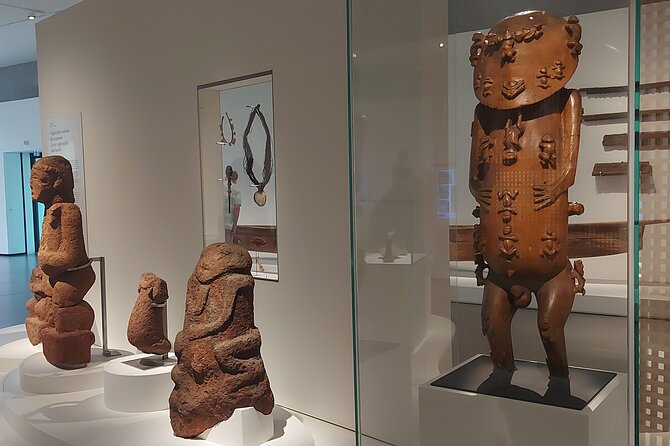
If you want to add one more layer, ask about Te Fare Iamanaha (The House of Treasures). It sits in gardens and has been on this site since 1974, recently renovated. The museum includes many sacred objects, and entry is not included in the base tour price.
For timing: the museum typically fits best on a full day if you have the energy. If your half day is already packed, this might be something to save for another moment in Papeete.
Teahupoo and Papara: Famous Surf Waves and Everyday Learning
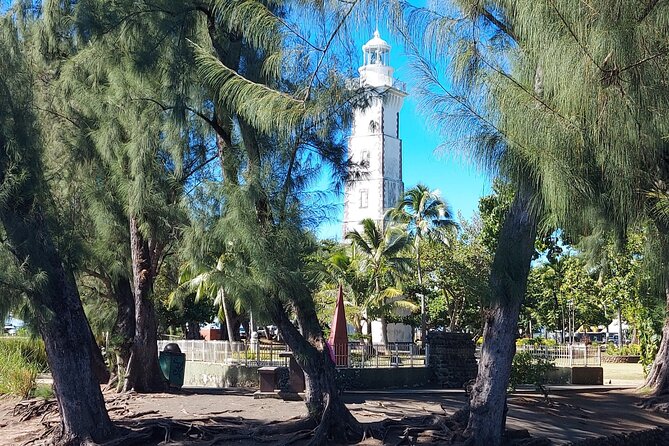
If your idea of Tahiti includes surf culture, the Teahupoo stop is the headline. It’s known for one of the most dangerous waves on the planet, and it was the site of the 2024 Olympic Games surfing competition.
The tour’s full-day timing gives you enough room to actually visit the area rather than just glance and move on. Lydia also describes an option you may see locals use: a taxi boat trip out toward the wave, depending on conditions.
Then you’ll head to Papara for a shorter coastal moment. The focus here is the Taharuu river mouth and the black sand beach—popular for learning to surf. If Teahupoo is the big “wow” wave, Papara is the more grounded “see people practicing” vibe.
How Lydia Keeps It Private, Flexible, and Not Rushed
This is a private tour, so there’s no need to wait on other groups or stick to a rigid script. Lydia customizes the itinerary based on what time you choose and the sites you want to prioritize.
In practice, that can mean two helpful things:
- You can shift emphasis if you care more about geology than flowers, or more about sacred sites than surf.
- When a planned stop isn’t available, the day can be adjusted with alternatives.
The vibe from the day’s structure is consistent: it’s not a sprint, but it’s also not a slow tour where nothing happens. Lydia manages the flow so you spend your limited time at each place learning what to look for.
Transport is also part of the comfort equation. A recent group described an 8-seater, air-conditioned van, which makes longer drives feel less draining—especially in the heat.
And if you’d like lunch, the tour doesn’t include a paid lunch stop, but Lydia can advise where to go and what it might cost. That small heads-up can save you from hunting for food while everyone’s already tired.
Smart Planning Tips for a Smooth Tahiti Day
This tour is outdoors-heavy, so good weather matters. If conditions are poor, you’ll need flexibility since the experience is subject to weather conditions.
Bring the basics for comfort:
- sunscreen and a hat (for viewpoints and coastal stops)
- a light layer for windier sea spots like the blowholes
- shoes that work on uneven, damp areas near waterfalls and water features
Also, plan your expectations. If you come with a guidebook mindset (I’ll just follow the sights), you might miss the real value. This tour works best when you lean into questions: why this place was used, how the island’s geology shaped daily life, and what different environments are home to.
Finally, the tour’s structure assumes you can enter and exit the vehicle on your own. If that’s a concern, it’s worth checking first so the day stays stress-free.
Should You Book Private Tours of Tahiti by Lydia?
Book this tour if you want Tahiti with context. Lydia’s strongest skill is turning scenery into understanding—Polynesian way of life, customs, geology, plants and animals, and the history tied to specific sites. It’s also a smart choice if you value flexibility in a private setting, with an itinerary that adapts without losing its focus.
Skip or reconsider if you only want pure beach relaxation, or if an 8-hour day packed with stops feels like too much. This tour is made for people who like moving through a place and learning while they’re there.
If you have limited time in Tahiti, go for the full day when possible, because it’s the version that pairs sacred sites, water features, and the Teahupoo surf area in one coherent arc. If you’re short on hours, the half day still keeps the educational style—just with fewer stops.
If the price per group works for your party size, this is one of the better “value for attention” ways to experience Tahiti instead of bouncing between disconnected stops.
FAQ
How long is the full-day tour?
Full-day tours are about 8 hours (approx.), with some itineraries running closer to 8–9 hours.
How long is the half-day tour?
Half-day tours are about 5 hours.
What does the tour cost?
The price is $650.00 per group, up to 8 people.
Do you get pickup in Papeete?
Yes, pickup is offered, and the tour ends back at the meeting point.
Are drinks included?
Bottled water is included. Breadfruit chips or fruit may be included if available.
Is the Te Fare Iamanaha museum included?
No. Visits to the Museum of Tahiti (Te Fare Iamanaha) are not included, and the admission is 1000f if you request it.
Are there entrance fees for the stops?
Most stops listed are admission ticket free. The museum is the one noted as not included.
What if the weather is bad?
The experience requires good weather. If it’s canceled due to poor weather, you’ll be offered a different date or a full refund.
What is the cancellation policy for a refund?
You can cancel up to 24 hours in advance for a full refund.
Is the tour recommended if I can’t enter the vehicle on my own?
It is not recommended for users who are unable to enter the vehicle on their own.