REVIEW · MOOREA
Private Whale Watching Adventure in Mo’orea
Book on Viator →Operated by Aimeho Private Escapes · Bookable on Viator
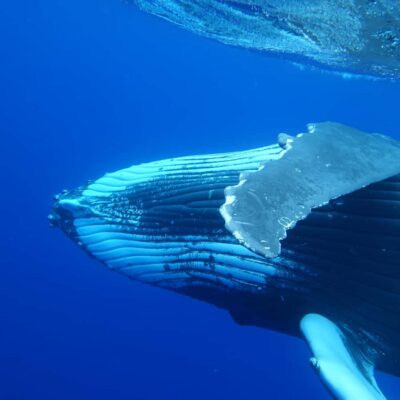
Whales in Moorea feel startlingly close. This private outing puts you in the humpback whale breeding zone with a guided search and the option to swim or stay on the boat.
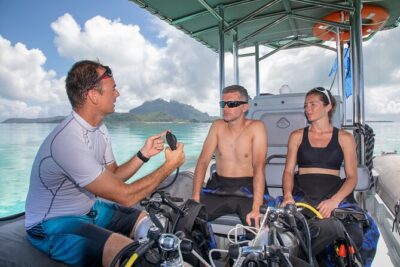
I especially love how Teoni guides the experience, with clear explanations that help you understand what you’re seeing and how to behave around wild animals. I also like the private setup, because it lets your crew manage time on the water without a big crowd pressure effect.
One heads-up: the swim part takes moderate physical fitness, and sometimes the safest call is to remain on the boat during longer searches or when conditions require it.
In This Review
- Key highlights before you go
- Mo’orea Humpback Whale Breeding Grounds: What Makes This Day Different?
- Starting at Plage de Tiahura: The Morning Flow and Timing
- Teoni and Captain Julien: How the Crew Keeps It Safe and Smooth
- Swimming vs. Watching From the Boat: Choose What Matches Your Day
- What the “Search and Swim” Portion Feels Like on the Water
- Included Gear, Water Breaks, and What to Pack Yourself
- Value for Money: Is $1,821.96 Worth It for a Private Whale Day?
- Weather and Whale Day Reality: What to Expect When the Seas Get Grumpy
- Who This Private Whale Swim Is Best For (and Who Should Skip It)
- Should You Book This Private Whale Watching Adventure in Mo’orea?
- FAQ
- How long is the private whale watching adventure?
- Where does the tour start, and when?
- Is this tour private?
- What snorkeling gear and refreshments are included?
- Do I have to swim with the whales?
- What happens if weather is bad?
Key highlights before you go
- Private for up to 6 people, so you get more focused time with your crew
- Fully qualified captain and guide who prioritize safety and proper whale behavior
- Swim option plus boat viewing if you prefer less effort or conditions aren’t right
- Snorkeling equipment included, with water and soda/pop provided
- Real-world conditions matter, including days with wind and waves where visibility gets tough
- Teoni and Captain Julien are specifically praised for finding whales and keeping everyone feeling safe
Mo’orea Humpback Whale Breeding Grounds: What Makes This Day Different?
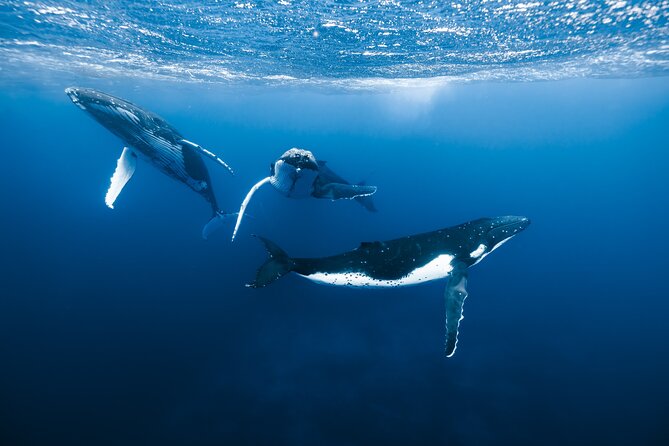
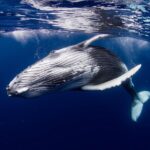
Mo’orea has a special place in the humpback whale story. The tour is built around the idea that you’re in their breeding grounds, not just cruising for a distant sighting. That one change in framing matters. When whales are part of the local routine, your guide can slow down, look longer, and focus on respectful positioning rather than rushing from one “maybe” location to the next.
This is also a respectful-experience model. The operator’s focus is split between your safety and the whales’ well-being. You’re told upfront that this is a wild-animal environment, and that rules are in place to minimize impact on the mammals. In plain terms: you’re not going to steam over to whales like it’s a theme-park moment. You’re there to follow the crew’s judgment, which is exactly what you want if your goal is a genuine, close encounter.
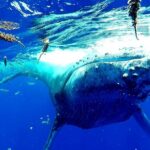
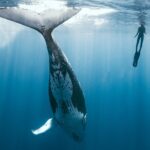
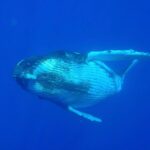
And yes, the emotional factor is real. Several people describe moments when the whales approach and the experience hits hard. That makes sense, because when a humpback swims near in clear, natural water, you stop thinking of it as a “tour” and start thinking of it as a living interaction.
You can also read our reviews of more private tours in Moorea
Starting at Plage de Tiahura: The Morning Flow and Timing
Your day starts at Plage de Tiahura in Moorea, with an 8:00 am start. From there, you’re on the water for about 6 hours (approx.), and the experience ends back at the same meeting point.
That morning timing is useful for two reasons. First, you’re getting a big chunk of the day done early, when you still have a clearer shot at finding whales without the day fully building. Second, it gives you breathing room if the crew needs extended search time. Sometimes whale days don’t follow a neat schedule, and this tour is designed around that reality.
Because it’s a private activity, it also feels different logistically. You’re not working around dozens of people’s schedules. You’re working as a single group with a captain and a guide who can adjust on the fly, based on where whales are and how they’re behaving.
One practical note: the tour uses a mobile ticket, and it’s described as being near public transportation. Private transportation isn’t included, so if you’re not already in easy reach of the meeting point, you’ll want to plan your ride ahead of time.
Teoni and Captain Julien: How the Crew Keeps It Safe and Smooth
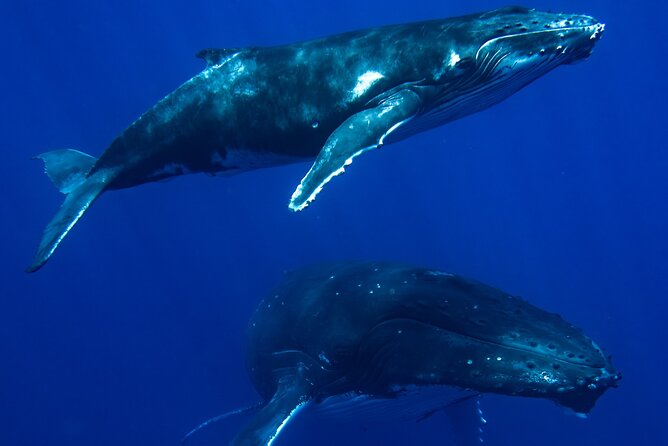
This is the part I’d watch for if I were deciding between private vs. group. The tour emphasizes that safety is a “huge priority,” and that the guides are qualified and experienced in this sector. That matters because swimming with whales isn’t just about luck—it’s about decision-making.
The crew’s job has two layers:
1) helping you understand humpback behavior in a way you can actually use while you’re in the water
2) keeping spacing and timing aligned with the situation
In the feedback, Teoni is repeatedly praised for being attentive and patient, with a good eye for spotting whales. People also mention Captain Julien as an outstanding captain—exactly what you want when wind, waves, and whale positioning all have a say.
Here’s what you should take away: this crew doesn’t treat safety as a checkbox. They treat it as the main language of the day. That’s why you may be briefed and kept on the boat in certain situations. It can feel like you’re losing out on the swim option, but the trade is that the day stays respectful and controlled—both for you and for the whales.
Swimming vs. Watching From the Boat: Choose What Matches Your Day
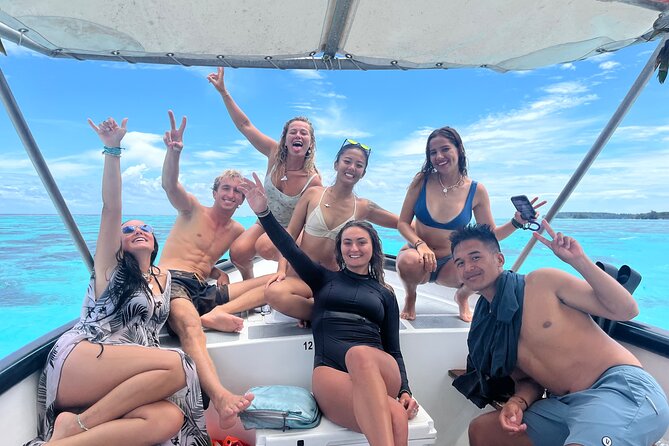
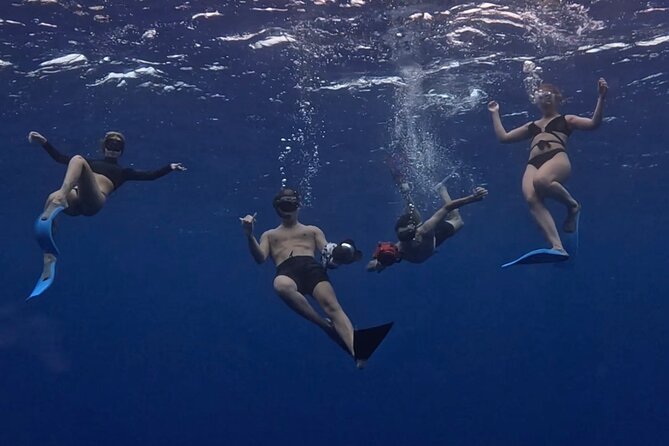
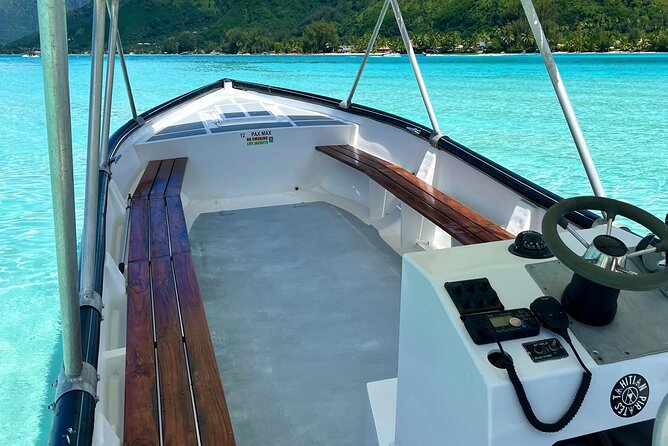
The tour includes snorkeling and gives you an option: swim with the whales if you’re comfortable and physically able, or observe from the boat if you’d rather keep effort lower.
They’re very clear that the swim activity requires some physical aptitude. That doesn’t mean you need to be a competitive swimmer. It does mean you should be honest with yourself about comfort in the water and the basic effort of snorkeling. Your crew will follow regulations and manage conditions, but your body still needs to cooperate.
Also, whale encounters can be unpredictable. The operator explains that sometimes rules mean extended search time and staying on the boat. That’s not a guarantee you’ll swim. It’s a guarantee that you’re not going to be pushed into something unsafe just to hit a marketing goal.
If you’re the type of traveler who gets seasick or feels unsure in open water, watching from the boat can still be a high-value choice. From the boat, you can focus on the whales’ movements and your guide’s explanations without the extra physical demands.
One of the best signals from past days: even when conditions were overcast and very windy, the crew worked hard to get people up close. Visibility can suffer with wind and swells, and it’s harder to spot details over choppy water. But they adjusted, and they even provided rain gear on a rough day. That’s a sign they’re prepared to handle real weather, not just perfect brochures.
What the “Search and Swim” Portion Feels Like on the Water
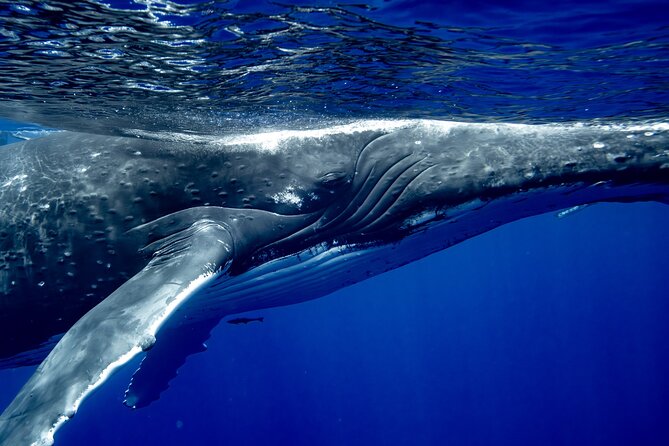
The core of the experience is a guided search for humpback whales, with explanations along the way. You spend time scanning for whales, and when they’re found, the crew works to manage your position responsibly.
Think of it like this: the search isn’t dead time. It’s part of the story. Your guide is briefing you so that when the whales appear, you know what you’re looking for and how to respond. The day becomes more than chasing a sighting.
When a whale encounter happens, your experience splits into two paths:
- If conditions allow and you’re suited for it, you may enter the water with proper snorkeling setup.
- If not, you’ll remain on the boat and watch from there.
Either way, the tone is calm and controlled. That’s a big difference from tours where the captain treats whales like traffic to be chased. Here, the crew is trying to find a balance—getting you close while staying within the behavior rules that protect the animals.
Also, this is a whale breeding zone. That’s one reason you can sometimes experience more than a single quick pass. A good crew will spend time rather than forcing constant movement.
You can also read our reviews of more whale watching tours in Moorea

Included Gear, Water Breaks, and What to Pack Yourself
The tour includes:
- Snorkeling equipment
- Soda/pop
- Bottled water
That’s a helpful baseline. You shouldn’t need to buy anything extra just to do the water part.
What’s not included:
- towels and sunscreen
- private transportation
My practical advice: pack a towel you’re okay getting sandy or wet. Bring sunscreen that won’t leave you feeling greasy in the water. And if you’re prone to sunburn easily, consider that you’ll be out for about 6 hours, and the boat time adds up.
Also bring your normal comfort items. You’ll be in and out of gear and dealing with changing weather. Even on days with rain or wind, the crew may help you stay warm, but you don’t want to rely on that alone.
Value for Money: Is $1,821.96 Worth It for a Private Whale Day?
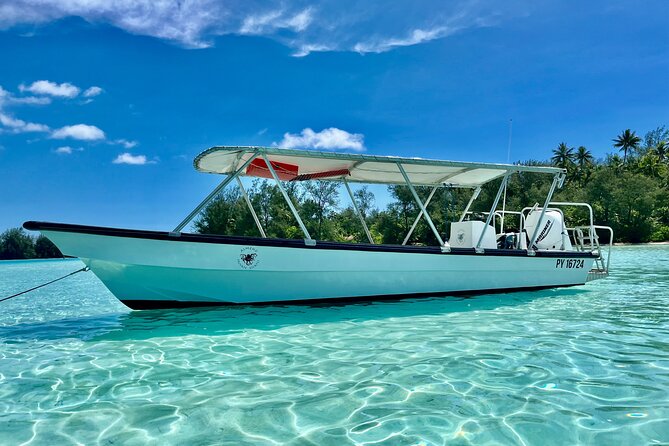
Let’s talk math. The price is listed as $1,821.96 per group, up to 6 people. That means your cost per person depends on how many people you actually have.
If you max it at 6, you’re around $300 per person. If it’s 4 people, it’s closer to $455 each. Private whale tours always price around the boat and crew time, not just per-head counting, so your value improves as your group fills up.
What makes this feel worth it for many people:
- You get more focused time with whales instead of everyone reacting to the same big crowd in the same tiny window
- The crew can manage the day with fewer constraints, which helps with respectful spacing
- Your guide can tailor attention and guidance to your group’s comfort level
The reviews also point to high satisfaction. The experience is rated 4.9 with 97% recommended, and the recurring praise is about finding whales effectively and keeping people safe and comfortable. That’s not small stuff. A whale day is expensive if it turns into frustration.
One more timing clue: it’s often booked about 119 days in advance on average. That tells you demand is real, and the best chance at a good slot is planning sooner rather than later.
Weather and Whale Day Reality: What to Expect When the Seas Get Grumpy
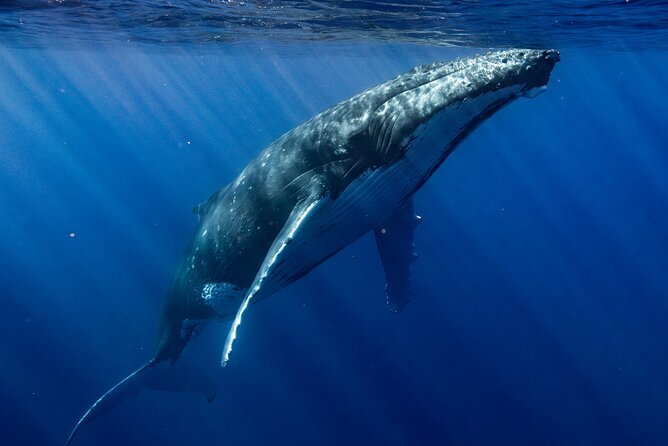
This activity requires good weather. That means if conditions are unsafe or not suitable, you’ll be offered a different date or a full refund. In other words, the operator is not gambling your day on rough conditions.
On at least one past trip, people reported overcast skies, rainy moments, and strong wind causing big swells. That makes it harder to see over the waves. It also makes the water experience physically tougher. The crew’s response mattered: they gave rain gear to help people stay warm and they still worked hard to get everyone as close as conditions allowed.
So if you’re deciding whether this is “worth it,” think of it as a partnership with nature. The crew controls safety and technique; weather controls sight lines. When you accept that balance, you’re more likely to enjoy the day even if the ocean is in a mood.
Who This Private Whale Swim Is Best For (and Who Should Skip It)
This is a great fit if:
- you want a private experience with minimal crowd pressure
- you like having a guide who explains what you’re seeing, not just pointing at splashes
- you’re comfortable with a swim option that requires moderate physical fitness
- your group includes people who would enjoy both water time and boat viewing
It may be less ideal if:
- you’re not comfortable with the physical demands of snorkeling and moving in open water
- you strongly need a guaranteed swim (this depends on regulations, conditions, and whale behavior)
- your group is looking for a purely easy, sit-on-a-tour-boat experience with zero physical involvement
If you’re unsure, the “watch from the boat” option is still part of the value. You’re not paying for a swim-only promise; you’re paying for a guided whale encounter in a breeding zone with safety as the rulebook.
Should You Book This Private Whale Watching Adventure in Mo’orea?
I’d book it if you want the best chance at a respectful, close humpback encounter and you like the idea of a private group up to 6 with a captain and guide who take the rules seriously. The combination of Teoni’s guidance, Captain Julien’s driving, and the repeated praise for finding whales makes it stand out as a well-run operation.
I’d pause if you’re expecting a guaranteed swim no matter what. This is a wild-animal experience with regulations, and sometimes the safest call is watching from the boat. If you can accept that, you’ll enjoy the day more.
If you want one simple decision rule: pick this when your group is ready to follow expert direction and you treat the whales as the priority. Do that, and your odds of a once-in-a-lifetime whale encounter go up fast.
FAQ
How long is the private whale watching adventure?
It runs for about 6 hours.
Where does the tour start, and when?
It starts at Plage de Tiahura in Moorea, with a start time of 8:00 am. It ends back at the meeting point.
Is this tour private?
Yes. It’s a private tour/activity, and only your group participates, with a group size of up to 6 people.
What snorkeling gear and refreshments are included?
The tour includes snorkeling equipment, soda/pop, and bottled water.
Do I have to swim with the whales?
No. You can swim if you meet the physical fitness needs, and you can also observe from the boat.
What happens if weather is bad?
The experience requires good weather. If it’s canceled due to poor weather, you’ll be offered a different date or a full refund.