REVIEW · MOOREA
Moorea: Aquablue Helmet Underwater Walking Experience
Book on GetYourGuide →Operated by Aquablue Moorea · Bookable on GetYourGuide
Moorea’s lagoon looks different from inside it. This helmet underwater walk lets you breathe easily while you stroll at about 12 feet, with a guide feeding and calling stingrays into view. I love how close you get to the fish and coral without needing scuba skills, but it’s not for everyone—there are clear health limits (and no, flip-flops won’t save you here).
What I really like is the human side of it: you’re checked, coached, and kept on a tight safety leash by a certified instructor. When I read about Vincent and his team, it matched what the setup promises—calm supervision, clear steps, and plenty of chances to ask questions, even if you wear glasses.
In This Review
- Quick hits before you book
- Helmet Walk 101: what you’re actually doing
- Getting to Intercontinental Moorea and meeting your instructor
- The 10-minute boat ride: where the magic starts
- The helmet: breathing underwater without scuba gear
- Underwater walk at ~12 feet: fish, coral, and slow movement
- Stingray feeding: the closest you’ll get (safely)
- What the tour feels like for families (and for non-swimmers)
- Price and value: is $103 per person worth it?
- What’s included, what isn’t, and what you should bring
- Safety and health limits you should take seriously
- How to make the most of your 30 minutes underwater
- Overall rating and what it signals
- Should you book Moorea’s Aquablue helmet walk?
- FAQ
- How long is the underwater part?
- Do I need scuba experience?
- Is there a minimum age?
- Where does the tour take place?
- What do I need to bring?
- Are water shoes provided?
- Does the price include transport?
- What language is the guide?
- What health conditions make it unsuitable?
- Are food and drinks included?
Quick hits before you book
- No scuba certification required: you stay connected to the boat’s air supply and follow your instructor’s pace
- Small group size (up to 8): more attention and less chaos when you’re suiting up and gearing down
- 30 minutes underwater at ~12 feet: long enough for fish spotting, not so long that you feel rushed
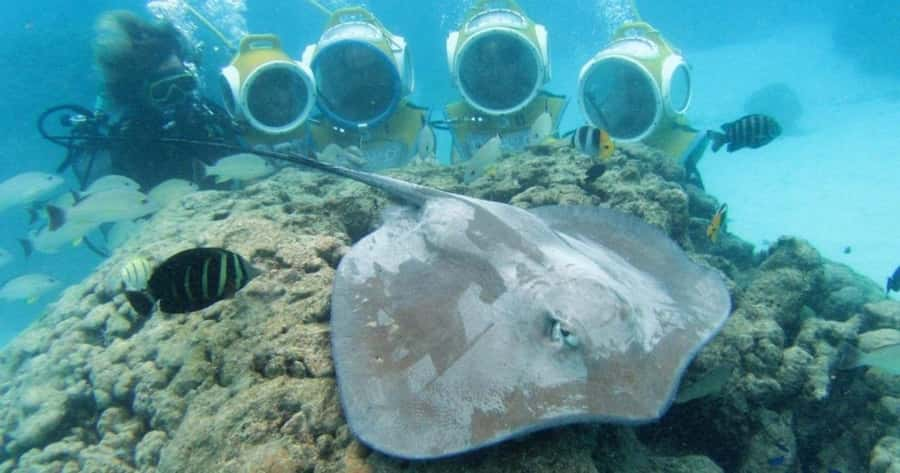
- Stingrays are a real moment: your guide feeds them for a gentle, close encounter
- Two lagoon options: you’ll anchor near Motu Fareone or Papetoaï based on conditions
- Transportation included from pier or hotel: plus optional bus pickup on the main road
Helmet Walk 101: what you’re actually doing
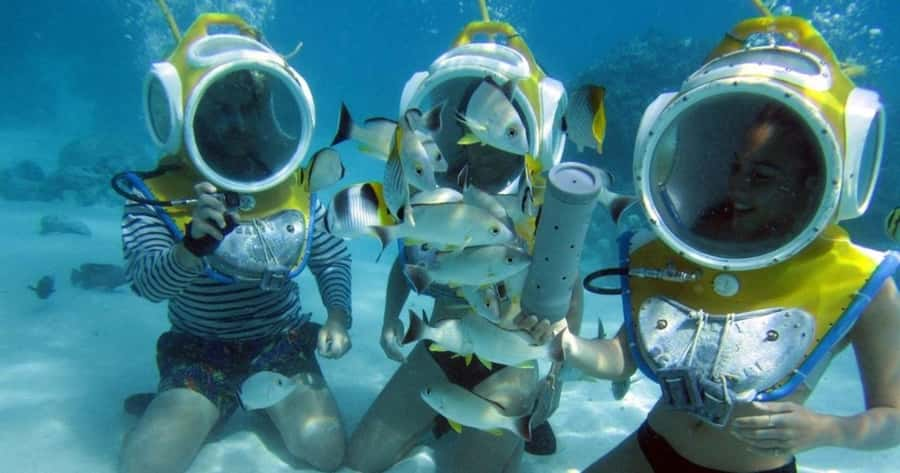
This is an underwater walking tour in Moorea that uses a diving helmet system designed for beginners. You don’t need scuba training or even snorkeling experience beyond being comfortable in and around the water. The helmet lets you breathe while you explore the seabed—think of it as guided underwater sightseeing with training wheels.
You’ll be tethered to the boat by an air hose, so you’re not managing tanks or checking gauges. That matters for most people because the experience stays simple: listen, move slowly, look around, and let the instructor guide your rhythm.
One more thing: you don’t just drop in and figure it out. The tour builds your confidence first with a briefing, then wetsuit and water-shoe fitting, and only then the water entry.
You can also read our reviews of more tours and experiences in Moorea.

Getting to Intercontinental Moorea and meeting your instructor
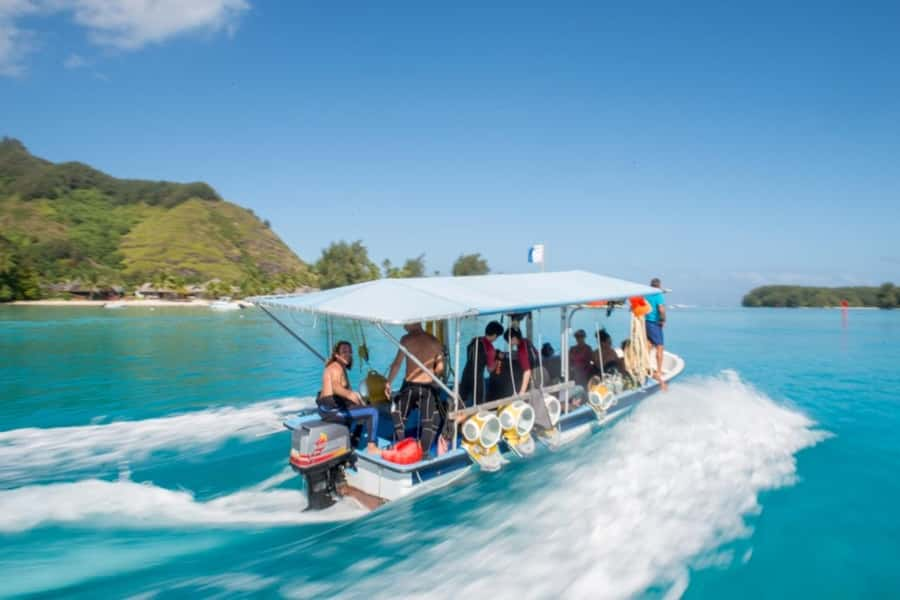
Your day starts with a pick-up from the pier or your hotel. If you have a car, you can come directly to Aquablue Moorea, and if you’re staying around the island’s main road you can also be picked up by bus. This kind of access is underrated in French Polynesia—less wrestling with transport means you can focus on the water.
At the Intercontinental Moorea Resort & Spa, you’ll meet your guide and go through an orientation. You’ll then get fitted in a comfortable wetsuit and secure water shoes. If you don’t have them, the tour includes them.
The vibe here is practical, not showy. You’ll cover safety rules, how the helmet works, and what you should expect once you’re in the water. Since this activity uses medical restrictions (more on that later), it’s worth paying attention in this briefing.
The 10-minute boat ride: where the magic starts
Next comes a short boat ride—about 10 minutes—to the lagoon area where you’ll anchor. Depending on the weather and the sea, you’ll be taken near Motu Fareone or into the calmer waters of Papetoaï.
Why this matters: lagoon conditions can change quickly in any island setting. The operator’s approach gives you the best chance at clear visibility and a comfortable entry, not a one-size-fits-all plan.
Once you’re anchored, your instructor takes over. You’ll be supervised the whole time, with safety checks before you go down.
The helmet: breathing underwater without scuba gear
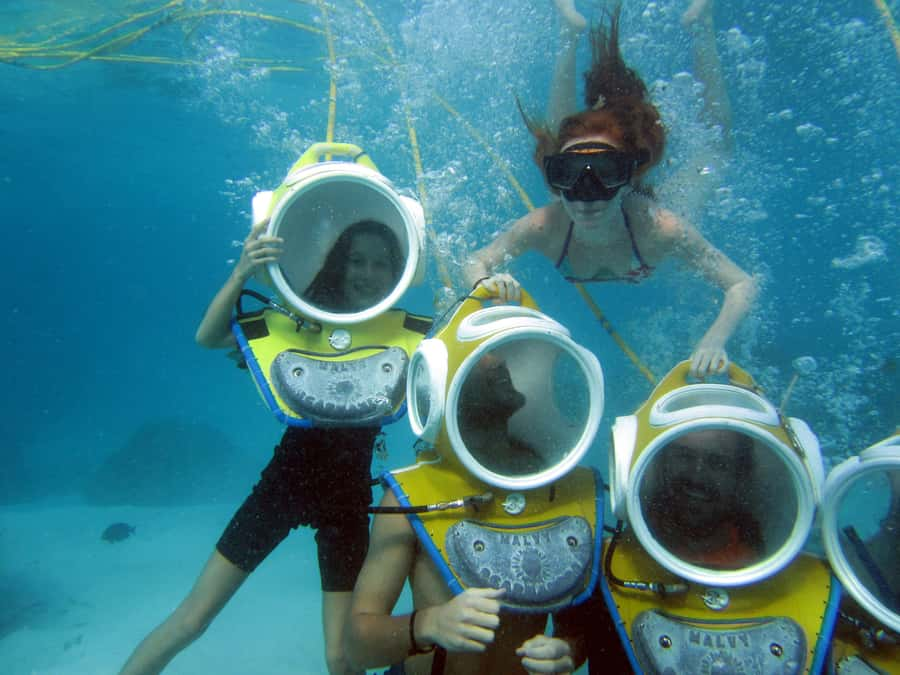
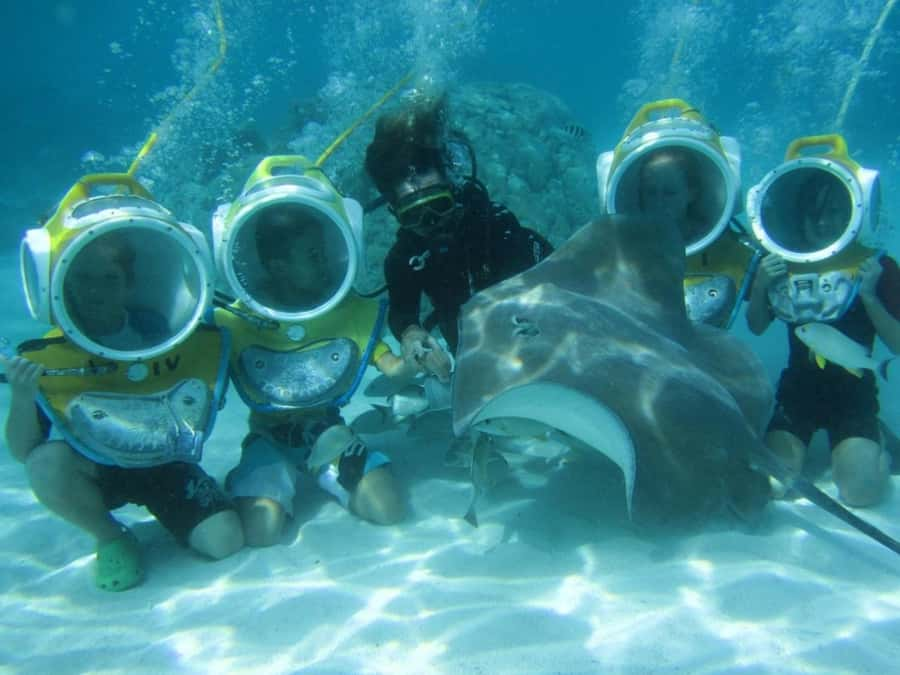
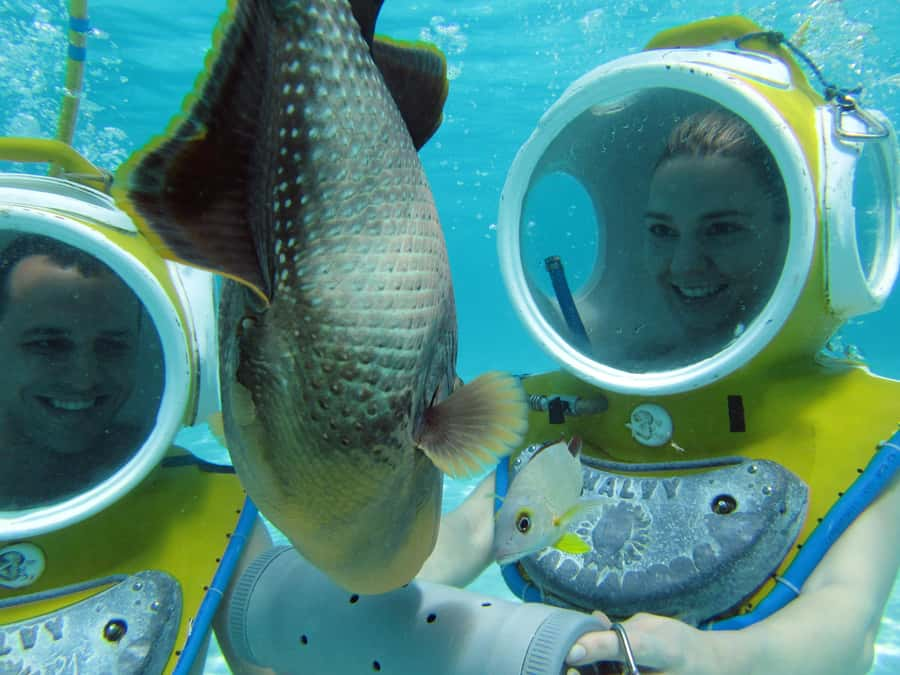
Here’s the core trick of this whole experience: the helmet is placed on your head just before you enter the water and removed as you exit. You remain connected to the boat’s air supply through the hose, so your breathing is handled without bulky scuba equipment.
As you descend using the ladder, the helmet’s weight becomes less noticeable, and your body feels more “freed up” than you might expect. That’s important for first-timers because it reduces the mental load. You can focus on the view and the animals instead of your equipment.
Also, it’s a real confidence builder if you’re not comfortable with snorkeling. You’ll still be in the water, but you’re not relying on surface breathing or trying to hold your face in place. Your instructor’s job is to keep you calm and moving correctly.
Underwater walk at ~12 feet: fish, coral, and slow movement
Your guided underwater time is about 30 minutes, at a leisurely depth of around 12 feet. Daylight filters down, and that’s the whole point. You get clear views of fish without needing advanced skills or special gear.
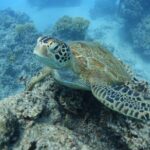
You’ll likely see tropical fish like triggerfish, butterflyfish, groupers, and parrotfish, plus coral heads that give you something to anchor your eyes on. The best way to enjoy this is to slow down. When you move gently, fish act less startled, and you’ll see more than a quick glance.
You’re also not wandering alone. Your instructor helps you with positioning and pacing so you don’t stress your body or miss the animals they’re calling out.

Stingray feeding: the closest you’ll get (safely)
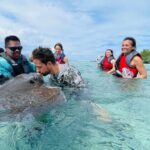
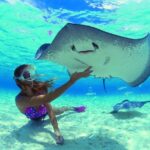
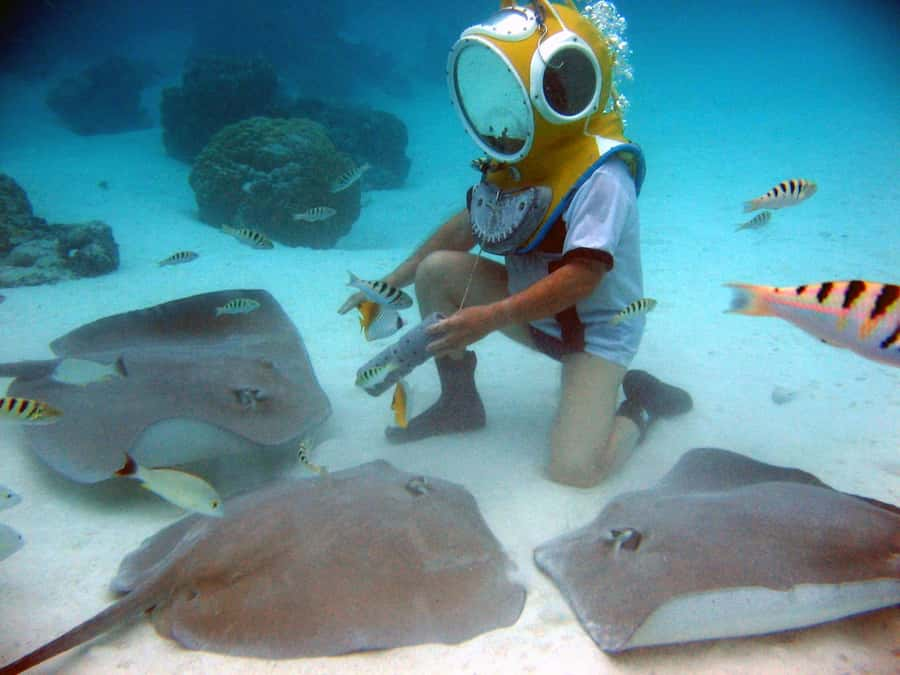
One highlight is the congregation of stingrays. Your guide feeds them, which draws them in for a close encounter. This is one of those moments that’s hard to replicate on a simple snorkel—because you’re guided, at the right depth, with steady control of how the experience unfolds.
You don’t have to chase anything. The feeding brings them to your path. When it works, the stingrays glide by in a calm, graceful way that feels more like an underwater meeting than a “spot and run.”
If you’re coming with kids, this is often the part they remember most. If you’re coming solo, it’s the part that turns a pretty lagoon into a true story.
What the tour feels like for families (and for non-swimmers)
This tour is listed as suitable from age 6 and works well for families, especially when everyone wants an ocean experience but not everyone wants to snorkel. The small group size (limited to 8) helps a lot here. It means shorter waits, more attention, and fewer people crowding the entry steps.
You still need comfort being in the water. This is not a “sit on the boat and watch” tour. But it’s also not technical diving. It’s more like guided underwater walking with a breathing helmet—more safety structure, less skill stress.
One practical note: rainy or choppy weather can affect comfort, and you’ll follow the instructor’s decisions. You might still have a great time, but keep in mind the lagoon depends on day conditions.
Price and value: is $103 per person worth it?
At $103 per person for about 150 minutes total, the price sits in the “activity money” category. It’s not cheap, but it also isn’t trying to sell you a long, multi-stop day.
Here’s the value logic that makes sense for many people:
- You’re paying for real professional instruction and a safety-first setup
- You get transportation from your pier or hotel (and sometimes bus pickup on the main road)
- You’re renting the key gear—the wetsuit and the helmet system—plus water shoes if needed
- You’re getting a guided underwater session built around a close-up animal moment (stingrays)
If you compare it to hiring private lessons, the structured guidance becomes a bigger deal. And if you’re traveling with kids or someone who doesn’t want scuba, this can be a practical shortcut to a memorable underwater experience.
What you should factor in: food and drinks are not included, so you’ll want a plan for before or after. Also, the tour isn’t for people with certain health issues, so you shouldn’t buy unless you’re confident you qualify.
What’s included, what isn’t, and what you should bring
Included in the price:
- 30-minute guided underwater tour
- Professional diving instructor
- Transportation from pier or hotel
- Water shoes if you don’t have yours
Not included:
- Food and drinks
Bring:
- Swimwear
- A towel
- Sunscreen
- Water shoes (reef or water shoes; no flip-flop sandals)
- A swimsuit under a cover-up
This matters because you’ll likely spend time moving between boat, wetsuit changes, and water entry. If you show up in flip-flops, you’ll be stuck adapting on the fly—so bring proper footwear and you’ll save time.
Safety and health limits you should take seriously
This tour requires a waiver because it’s an underwater activity with medical restrictions. The operator is clear that certain people can’t do it, including pregnant women, people with pulmonary or cardiac issues, people with reduced mobility, back and/or neck problems, and people with asthma. There’s also a note that some guests may be able to go if they provide a medical certificate from a physician.
It’s also not suitable if you fall into these categories:
- Pregnant women
- People with back problems
- People with mobility impairments
- People with heart problems
If any of this touches you, don’t assume you can “tough it out.” Get clarity first. You’re wearing a helmet, descending to a fixed depth, and staying connected to a breathing system. That’s not the moment to gamble with safety.
How to make the most of your 30 minutes underwater
You get one shot at the underwater time, so treat it like a short guided nature walk. I’d do three things:
- Keep your movements slow and controlled. You’ll see more fish and feel more comfortable.
- Focus your eyes in layers: coral heads first, then fish, then the stingrays when your guide signals.
- Ask questions at the surface, not mid-walk. The instructor can explain how to position your body, and you’ll benefit more than trying to figure it out while submerged.
If you wear glasses, this tour can still work. Your view will be part of the experience, and your instructor’s setup and monitoring help reduce uncertainty.
Overall rating and what it signals
This experience has a 4.9 rating from 53 reviews. That’s a strong score for a snorkeling-adjacent activity where comfort and safety matter. The consistent theme is confidence: people feel well looked after, and the underwater experience lives up to the promise of close fish viewing and stingray interaction.
Also, the language options are helpful—English and French—so you can ask follow-up questions without guessing.
Should you book Moorea’s Aquablue helmet walk?
Book it if you want:
- A beginner-friendly underwater experience without scuba training
- A close encounter moment, especially with stingrays
- A family activity where the group stays small (up to 8)
- Guided instruction with safety-first pacing
Skip it if you:
- Don’t meet the medical requirements (especially asthma, cardiac/pulmonary issues, pregnancy, or back/neck problems)
- Can’t comfortably be in the water for the portion of the tour that involves entering and walking underwater
- Expect a full day with meals included—food and drinks aren’t part of the package
If you’re visiting Moorea and you want an animal-focused water activity that feels structured and safe, this is one of the clearest “yes” options.
FAQ
How long is the underwater part?
You’ll spend about 30 minutes underwater during the guided portion, with the full tour running about 150 minutes total.
Do I need scuba experience?
No. You don’t need prior scuba training. You should be comfortable on and in the water, but the tour is designed for first-timers.
Is there a minimum age?
Yes. This activity is listed as suitable for children from 6 years old.
Where does the tour take place?
It happens in Moorea’s lagoon, anchoring near Motu Fareone or Papetoaï depending on sea and weather conditions.
What do I need to bring?
Bring swimwear, a towel, sunscreen, and water shoes. The tour notes that reef/water shoes are needed and flip-flop sandals are not recommended.
Are water shoes provided?
Yes. If you don’t have your own water shoes, the tour includes them.
Does the price include transport?
Yes. Transportation from the pier or your hotel is included. If you drive, you can come directly to Aquablue Moorea, and bus pickup is available on the main road around the island.
What language is the guide?
The live tour guide speaks English and French.
What health conditions make it unsuitable?
The tour states it’s not able for pregnant women, people with pulmonary or cardiac issues, those with reduced mobility, back/neck problems, and people with asthma. A medical certificate is mentioned in the information provided.
Are food and drinks included?
No. Food and drinks are not included.