REVIEW · BORA BORA
Private Tour: Aqua Safari Scuba Diving
Book on Viator →Operated by Aqua Safari Helmet Dive · Bookable on Viator
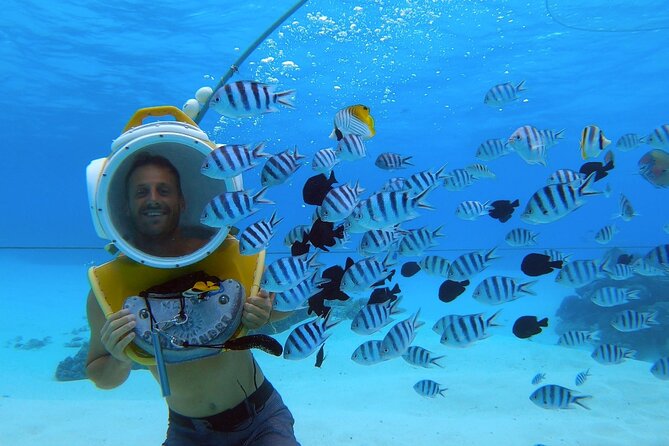
Helmet scuba in Bora Bora sounds wild, right? The whole point is simple: you breathe normally, your head stays dry, and you still get that first look at reef life at just 3 meters. I love that it feels more like a guided underwater walk than a jump-in-at-the-deep-end situation, and the team’s safety briefing keeps it grounded and reassuring.
The other thing I really like is the private setup for couples, families, or friends. You get more direct attention while you’re out in the lagoon, and that matters when you’re seeing fish up close for the first time. One drawback to plan for: the experience requires good weather, so rough conditions can mean changes or a reschedule.
In This Review
- Key things to know before you go
- Bora Bora’s 3-meter coral walk: why this feels easy for non-swimmers
- What the 2-hour experience really includes (with 30 minutes underwater)
- Helmet scuba comfort: equipment, swimwear, and camera tips
- Price and logistics: what $765.22 for up to two buys you
- Fish and corals you’ll actually see at shallow depth
- Weather, flight timing, and how to plan your lagoon day
- Should you book this Aqua Safari helmet scuba session in Bora Bora?
- FAQ
- How long is the Aqua Safari helmet scuba experience?
- How deep do you go during the underwater part?
- Do I need to know how to swim?
- Is this a private tour?
- What’s included in the price?
- What should I bring that’s not included?
- Do they offer pickup?
- When will I get confirmation after booking?
- What if the weather is bad on the day?
- How long should I wait before flying after the activity?
Key things to know before you go
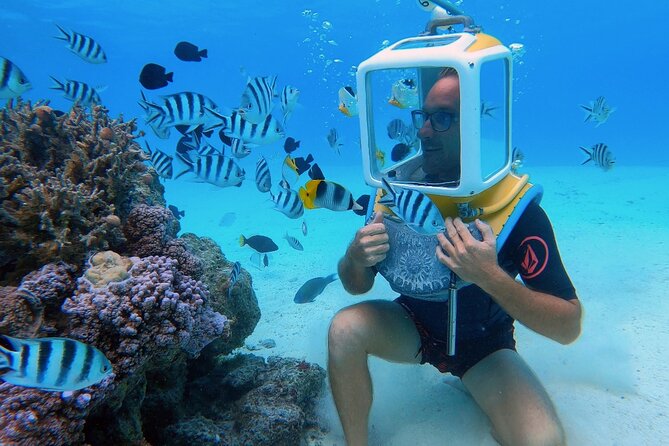
- Helmet-on comfort: you keep your head dry and breathe normally
- Beginner-friendly depth: you walk at about 3 meters
- Real reef viewing: coral garden setting with lots of fish life
- Private group attention: only your group participates
- Photo opportunities: bring an underwater camera, but they also take photos you can purchase
- Bring your own swim gear: swimsuits aren’t included
Bora Bora’s 3-meter coral walk: why this feels easy for non-swimmers
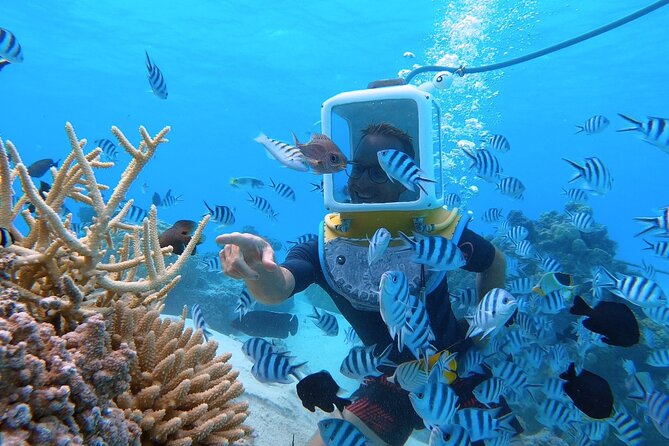
This is not the classic scuba story where your head goes under and you figure everything out while panicking. Here, you start with explanations and a short safety briefing, then you suit up with a helmet so you can breathe normally. The best part is that you get the reef experience without feeling like you have to be an expert.
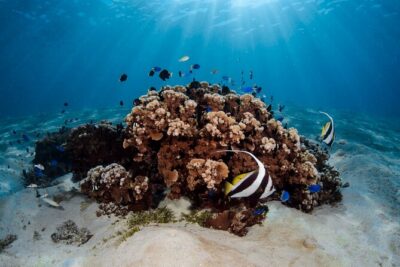
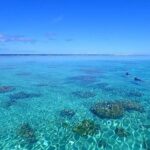
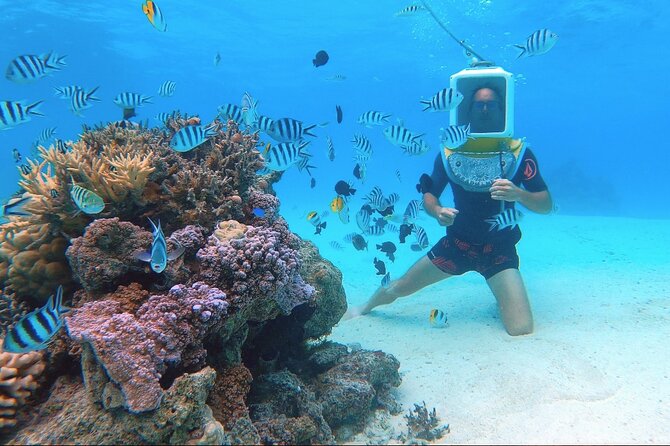
You walk along the bottom at about three meters, in crystal-clear lagoon water. The surface is sandy, which makes the whole thing steadier than you might expect. If you’re worried about balance or you hate the idea of treading water, that sandy bottom detail is a big deal.
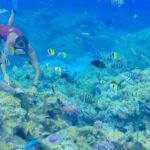
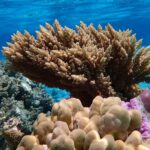
You’ll be guided through the coral garden while you look for marine life all around you. Think fish that normally feel like a postcard, plus the occasional surprise like a stingray or a turtle. This level of snorkeling-adjacent comfort is often what makes people say it’s their best first “underwater” step.
Still, it’s worth being honest about what it is and isn’t. You’re not doing open-water freedom or cruising the reef for a long time on your own. You’re doing a structured, guided walk where the focus is safety, comfort, and seeing the reef at shallow depth.
You can also read our reviews of more private tours in Bora Bora
What the 2-hour experience really includes (with 30 minutes underwater)
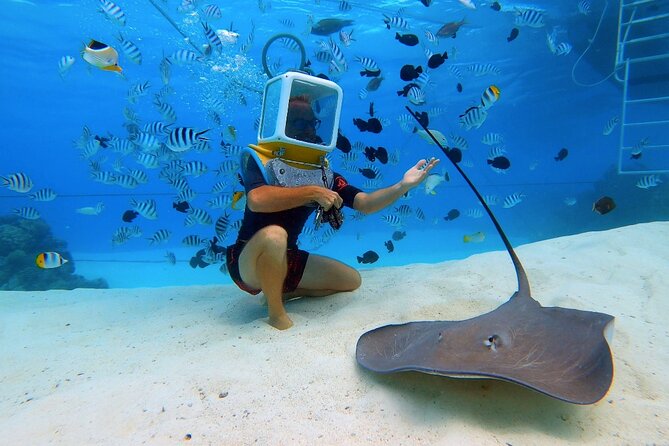
The total outing is listed at about 2 hours. Within that window, you’ll spend roughly 30 minutes underwater in the lagoon. What fills the rest of the time is the human stuff: getting organized, briefing, and getting you set up properly.
First comes the transfer, which is provided by bus or boat depending on logistics. Once you’re at the site, you’ll get explanations about how the activity works and how the helmet system behaves underwater. There’s also a safety briefing available in different languages, which helps if you’re not comfortable with technical instructions.
Then it’s time for gear and comfort. The helmet equipment is provided, and it’s designed so you can keep your head dry. You’ll wear it on your shoulders, and from there the goal is to go underwater enough to reach the coral garden depth and start the walk.
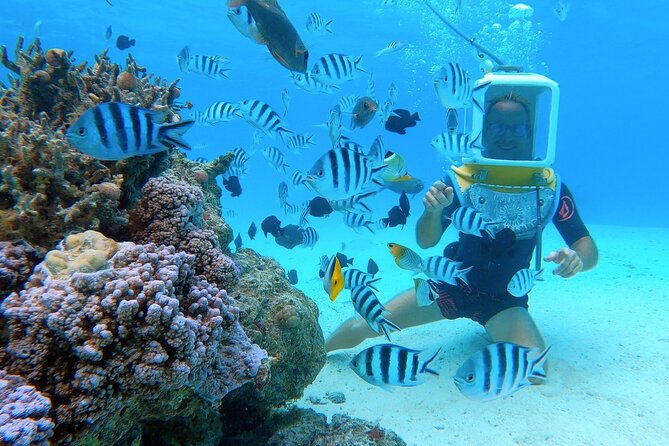
During the underwater portion, your instructor guides you along the bottom at about three meters. You’ll be looking at coral formations and watching fish move in and out of the reef space. This is also when you might see stingrays or turtles—no guarantees, but that’s exactly the kind of wildlife the lagoon is known for.
After the underwater time, you’re back on top and the experience ends with practical comforts like towels. You also get bottled water, which may not sound exciting, but after time in sun and salt air, it’s a real quality-of-life detail.
Helmet scuba comfort: equipment, swimwear, and camera tips
You get the helmet equipment as part of the experience, plus towels and bottled water. What’s not included is your swim setup. Plan on bringing a swimsuit, and also consider bathing shoes, lycra, or a wetsuit if you personally like extra protection.
The good news is that you likely won’t need complicated footwear. One review specifically noted that there’s no need for water shoes because the bottom is sandy. If you want maximum comfort, bring simple swim-friendly shoes anyway, but don’t feel forced into expensive gear based on fear alone.
For clothing, go with what you can move in easily. This is a short underwater session, so you’re not dealing with long, cold-water conditions described here. A well-fitting swimsuit plus whatever you normally use for comfort in sun can be a smart approach.
Bring an underwater camera if you have one. That came up as a must-do tip, since you’ll be close to fish and reef structure at a shallow depth. If you don’t have your own gear, that’s okay too—this operator takes photos that you can buy later.
Also, consider your expectations for photos. Since you’re walking at a fixed depth and staying within a guided route, your best shots will come from looking around and capturing fish moments rather than trying to do action “swims” for video.
Price and logistics: what $765.22 for up to two buys you
The price is $765.22 per group, up to two people. On paper, that can look “high” if you compare it to group snorkeling deals. But this is a private tour, and private attention in Bora Bora lagoon activities is where the cost starts to make sense.
You’re paying for privacy, plus the operator handles the practical pieces: transfer, helmet equipment, bottled water, and towels. You also get that focused underwater guidance for the exact amount of time you want—30 minutes underwater—without turning the day into a half-day mission.
Timing matters too. This experience is commonly booked around 170 days in advance, which is a sign that the best slots can go quickly in a busy season. If you’re traveling with a tight schedule, it’s smart to lock it in early rather than waiting for perfect conditions.
You’ll receive confirmation within 48 hours of booking, subject to availability. The ticket is mobile, which simplifies the day-of process since you’re not managing paper receipts on a beach.
One more practical note: it’s listed as private, so only your group participates. That means you’re not squeezing your comfort level into a shared situation with strangers who have very different expectations underwater.
Fish and corals you’ll actually see at shallow depth
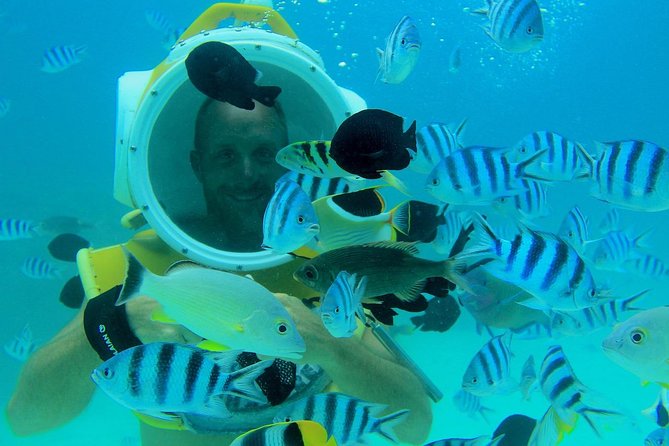
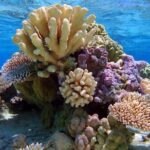
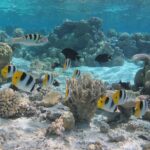
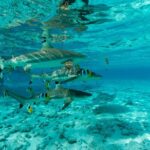
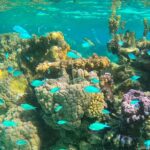
At this depth, the lagoon feels like it’s built for eye-level reef viewing. The experience description points to a coral garden with fish you can recognize right away: parrot fish, butterfly fish, clown fish, and moray eels.
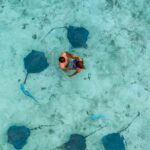
Beyond the steady lineup of small reef life, you may also get bigger surprises. The description includes the chance to see a stingray or a turtle, and that’s the kind of moment that makes people remember this longer than a standard beach swim.
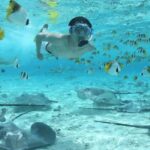
One review also mentioned meeting an affectionate stingray named Coco Channel, described as a pastenague skate. That kind of personal-feeling interaction is a good example of why this kind of shallow, guided walk works: you’re not chasing wildlife, and the animals can drift in and out of view naturally.
What I’d tell you to do on the day: slow down with your eyes. Don’t race to look for the biggest animal. The coral garden is the whole point, so spend time scanning the reef structure and the open water just next to it.
Also, this isn’t about speed or performance. Your role is to stay calm, follow the instructor’s directions, and let the lagoon show you what it wants to show you.
A few more Bora Bora tours and experiences worth a look

Weather, flight timing, and how to plan your lagoon day
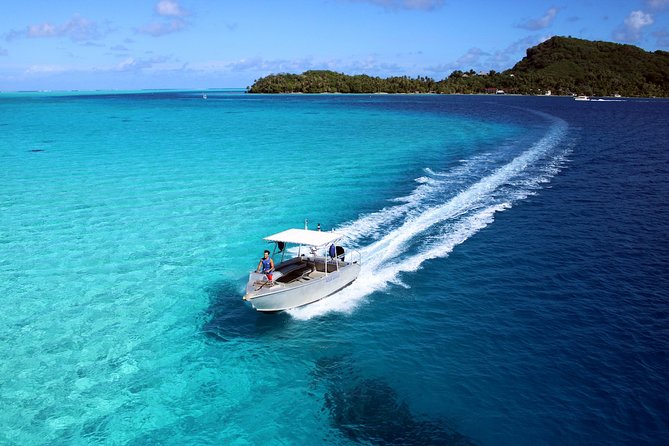
This experience requires good weather. If it gets canceled due to poor weather, you’ll be offered a different date or a full refund. In Bora Bora, that’s exactly the kind of activity that makes planning with a buffer day worthwhile.
Your day plan should also include the flight timing note provided: 12 hours for a domestic flight and 24 hours for an international flight after the experience. Treat those as your practical minimums so you’re not stressed on departure day.
Because the underwater time is only 30 minutes, you might feel like you can stack it tightly with other plans. You can, but I still recommend building a little margin. Transfers, gear setup, and sunlight time all take longer than you expect when you’re on island time.
Finally, remember that you’re in lagoon water. That means sun exposure is real, and wind can change how comfortable you feel. Even if the water looks calm, bring the kind of sun protection you normally use outdoors.
Should you book this Aqua Safari helmet scuba session in Bora Bora?
I think it’s a strong choice if you want a first underwater experience with training wheels—breathing normally, head dry, shallow depth, guided attention. It’s also a great fit if you’re traveling as a couple and you care about privacy.
It’s especially worth it if you’re anxious about traditional scuba setups. The whole structure here is meant to reduce the fear factor: you get instructions, you step into shallow water, and you keep your comfort level while you learn what reef life feels like.
I would skip it if you’re chasing a long, adventurous underwater outing or a deep-water challenge. This experience is built around comfort and a short, guided reef walk, not exploration at depth or extended time underwater.
If your priority is to see fish and coral in a safe, beginner-friendly way—and you’re traveling on a timetable that can handle weather shifts—then booking this is a smart move. Add a camera if you have one, wear your easiest swim gear, and go in ready to look carefully. The reef tends to reward patience.
FAQ
How long is the Aqua Safari helmet scuba experience?
It lasts about 2 hours total, with around 30 minutes spent underwater.
How deep do you go during the underwater part?
You walk safely at a depth of about 3 meters.
Do I need to know how to swim?
No. The experience is described as possible even if you do not know how to swim.
Is this a private tour?
Yes. It’s a private activity, and only your group participates.
What’s included in the price?
Included are transfer by bus or boat, bottled water, helmet equipment, and towels.
What should I bring that’s not included?
You’ll need to bring a swimsuit. The listing also notes bathing shoes, lycra, and a wetsuit are not included.
Do they offer pickup?
Pickup is offered.
When will I get confirmation after booking?
You should receive confirmation within 48 hours of booking, subject to availability.
What if the weather is bad on the day?
This experience requires good weather. If it’s canceled due to poor weather, you’ll be offered a different date or a full refund.
How long should I wait before flying after the activity?
The guidance provided is 12 hours before a domestic flight and 24 hours before an international flight.