REVIEW · BORA BORA
Aqua Safari Introductory Helmet Dive (Underwater Walk)
Book on Viator →Operated by Aqua Safari Helmet Dive · Bookable on Viator
A helmet-and-guided walk under Bora Bora is one of the smartest ways to see the lagoon. You get 30 minutes walking underwater at shallow depth, with a guide and photos, even if you cannot swim. I also love that your head stays dry, so the whole experience feels calmer than snorkeling. The main thing to consider is ear pressure: some people feel it going down, and you may need gum/slow breathing to get through it.
This is built for comfort and control. After a safety briefing, you strap on the gear, descend, and walk in a rope-managed area so you stay in the coral garden zone. Expect a group size that stays small enough for the guides to keep eyes on everyone, plus a high-definition camera capturing your underwater moments.
Is it worth it for the price? At $158.76 per person, it’s not a budget activity—but you’re paying for the full setup (equipment, instruction, guided walk at the lagoon floor) and the convenience of doing it without swim training. If you’re chasing the cheapest way to see fish, this may feel steep; if you want a once-in-Bora-Bora experience with strong “I can’t believe this is real” payoff, it’s easier to justify.
In This Review
- Key things I’d focus on before you go
- The big appeal: Bora Bora fish, without the skills test
- How the timing and boat transfer usually goes
- Entering the helmet: safety briefing, then calm control
- The underwater walk itself: shallow reef, big life
- The rope matters more than you think
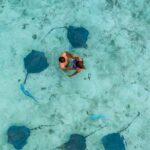
- Stingray factor: trained, friendly, and close
- Coral garden viewing tips that make the walk better
- Photos and souvenirs: why the camera on the staff matters
- Who should book this (and who might not)
- Great fit for you if…
- You may want a different plan if…
- Price and value: $158.76 and what you’re really buying
- Day-of logistics: meeting point, small group size, and communication
- Should you book this helmet walk?
- FAQ
- Do I need to know how to swim or snorkel?
- How long is the underwater part of the tour?
- How deep will I go?
- Will I be provided with equipment?
- Will I be able to breathe normally under the helmet?
- Are photos taken during the activity?
- Is pickup offered?
- How many people are in the group?
- Is there an optional part involving feeding fish?
- What happens if weather makes the activity unsafe?
- What is the cancellation deadline?
Key things I’d focus on before you go
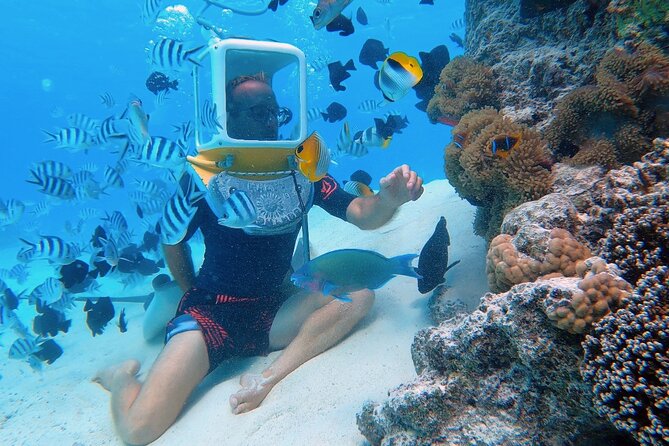
- Helmet keeps you dry and makes this doable for non-swimmers (no swimming or snorkeling skill required)
- About 30 minutes underwater at around 3 meters / 10 feet so you’re not rushing
- Guides take HD photos during the walk, then you can buy the package afterward
- Rope and a roped-off area help you stay in the safe zone and reduce worry
- Fish feeding is part of the show, with bread used to attract coral reef life
- Ear pressure is the one common friction point, so plan for slow descents
The big appeal: Bora Bora fish, without the skills test
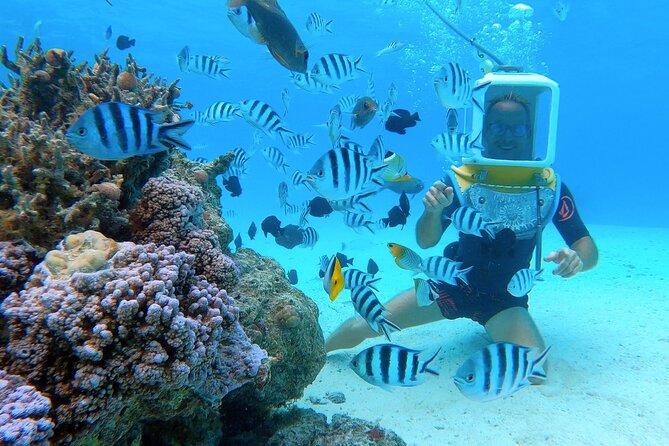
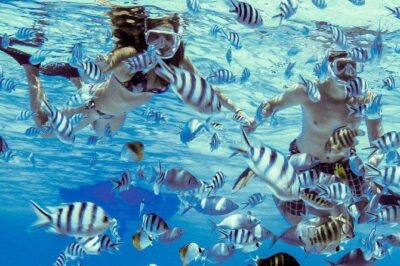
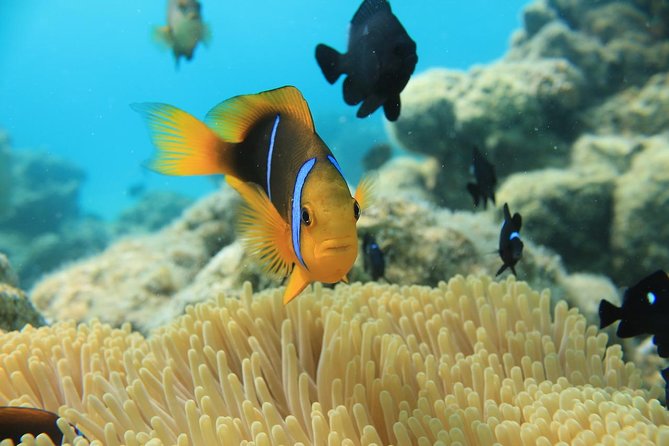
This isn’t snorkeling where you hold your breath and fight for balance. It’s more like a guided “walk” format: you put on the helmet, and you’re supported by the gear and the staff as you go down. The result is that you can see parrot fish, butterfly fish, clown fish, and other lagoon residents at close range without needing scuba training or even strong swimming ability.
In the lagoon, that changes the feeling right away. With snorkeling, you’re often watching your flippers and trying not to panic. With the helmet, you’re mostly focused on looking out the visor and following your guide’s cues. One of the best parts is that the guides manage the pacing—so you can actually enjoy what’s around you, not just survive the activity.
It also helps that the setup is designed to be “first-timer friendly.” People who wear glasses and struggle to snorkel often find this a workable alternative, since the helmet system removes a lot of the typical snorkeling hassle.
You can also read our reviews of more tours and experiences in Bora Bora.

How the timing and boat transfer usually goes
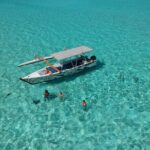
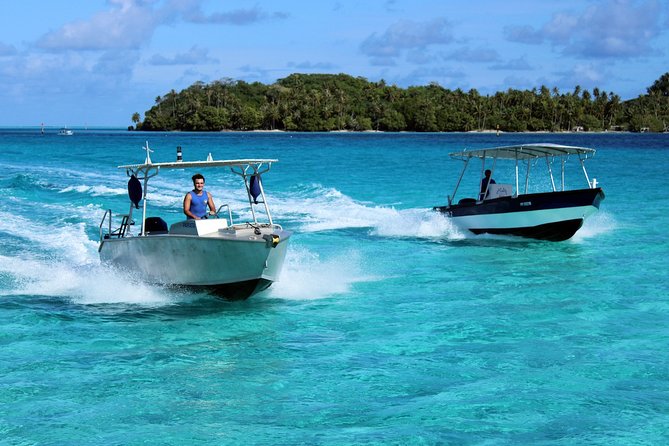
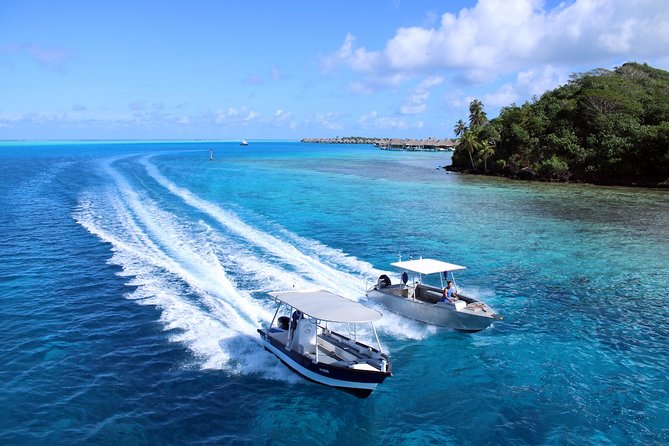
The experience runs about two hours total (the underwater portion is roughly 30 minutes). In practice, that means your day doesn’t get swallowed whole. You’ll spend some time with gear setup and briefing, then you’ll transfer by boat to the reef area, then you’ll get your underwater walking time, and you’ll return right back to the meeting point.
If you’re staying in a resort, pickup can make the logistics simpler. Many guests get hotel or dock transfers before boarding. You might ride in one boat, then switch to another boat that’s waiting near the site with the helmet gear ready. That sounds like extra steps, but it tends to keep the actual underwater time clean and on schedule.
What to expect on the ground:
- You start at Ferry and Boat Point near Bora Bora (the activity ends back there).
- If you have pickup, confirm the time window carefully and keep an eye out for the message with pickup timing.
- Once you’re on the water, the ride to the site is usually part of the fun—not too long, and it helps you reset before the helmet goes on.
A small practical note: one review mentioned a late pickup that still worked out, so build in buffer time if you’re juggling a cruise or a tight return schedule.
Entering the helmet: safety briefing, then calm control
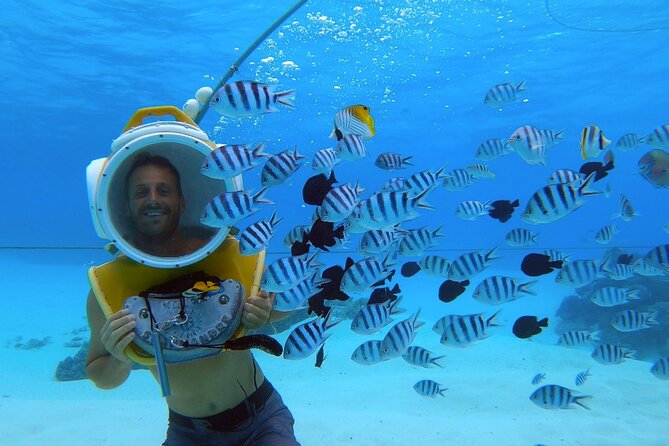
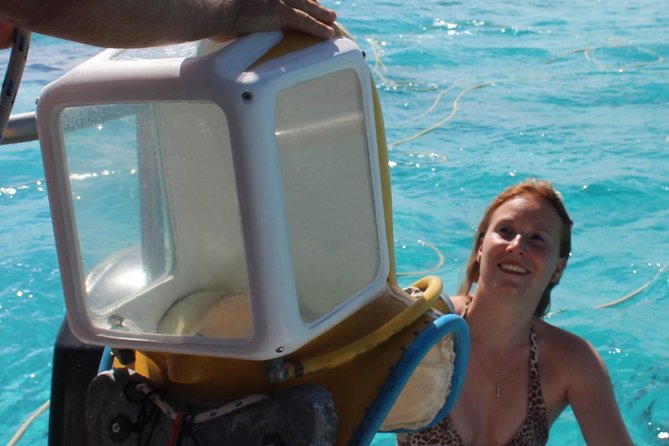
Before you even hit the water, you’ll get an instructional safety briefing and guidance through the gear. This matters more than it sounds. A helmet walk has a few unusual sensations—weight, breathing feel, and the way you perceive your surroundings through the visor.
Then the descent happens with staff right there. Several guides emphasized reassurance and clear instructions, and it shows in the way people describe feeling at ease once the process starts. Guides like Tama, JP, Demi, Eliza, Rémi, Séverine, and others are repeatedly credited for making the walk easy to understand and comfortable to manage.
Two sensory realities you should plan for:
- Your peripheral vision is limited through the helmet visor. That can make you feel slightly “boxed in” at first, even if you’re comfortable underwater.
- Ear pressure can happen for some people. If you’ve ever had trouble on planes or rides, that’s a clue you should be prepared.
A helpful tip from an experienced perspective: bring gum. Chewing can help with ear popping during the down-and-up sequence. Go slow, and follow the guide’s pacing cues instead of trying to force comfort.
The underwater walk itself: shallow reef, big life
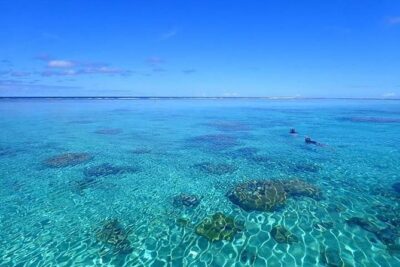
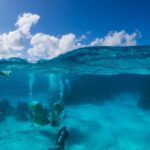
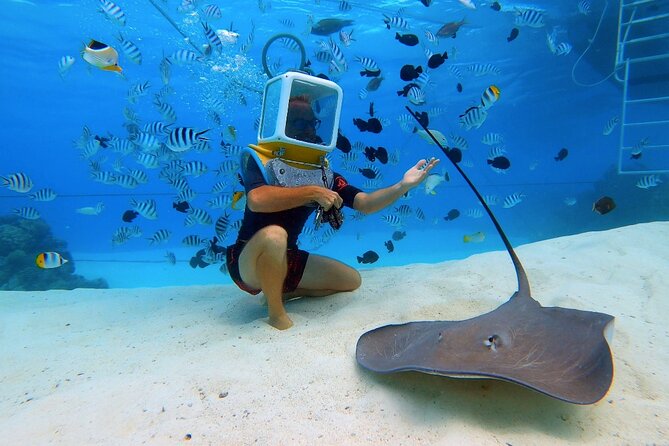
The core experience is walking on the lagoon floor at about 3 meters (around 10 feet), surrounded by coral. You’ll likely see a coral garden that’s roped off into a defined area, so you don’t end up wandering too far or overthinking where you are.
What you’ll see is the point:
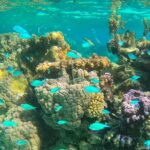
- Parrot fish and butterfly fish move through the coral structures.
- You can get a close look at clown fish and other small reef residents.
- In the right moment, you may spot larger lagoon animals like moray eels, plus stingrays that make the experience feel almost unreal.
And because it’s shallow and controlled, it’s not just “look at fish from a distance.” You can get that close-up feeling—especially when fish gather where you’re walking.
The rope matters more than you think
Conditions can change: wind, current, and movement of the water might happen. When that’s the case, you’re not expected to “power through.” You’re encouraged to hold the rope to reduce drag and keep yourself stable. That small piece of structure makes a huge difference for first-timers and for anyone who tends to worry in open water.
A few more Bora Bora tours and experiences worth a look

Stingray factor: trained, friendly, and close
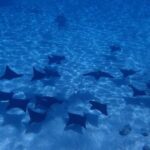
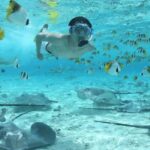
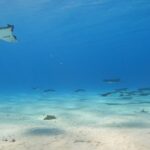
A standout theme in the experience is the presence of a friendly stingray. Some teams have stingrays that behave like resident “regulars” and respond to commands. One guide team was even described as having a stingray that knows commands. The effect is that the stingray feels like part of the show, not a rare lucky sighting.
If you’re coming to Bora Bora specifically for close-up wildlife, this is one reason the helmet walk gets such high praise.
Coral garden viewing tips that make the walk better
The experience is designed to be easy, but a few mindset tweaks help you enjoy it more.
First, look with your whole body. Because peripheral vision is limited, your instinct may be to turn your head less than you should. Instead, when you see movement, rotate your body and let the guide’s cues set your scanning pattern.
Second, expect the fish to come toward you. Feeding is part of the attraction. Many groups use bread to attract fish. One review noted that the feeding option can be optional, and some people find it spooky to touch fish. If you want that extra interaction moment, ask about the bread option and decide based on your comfort level.
Third, treat the helmet like a camera. The visor isn’t just protection. It’s your frame. If you’re planning to bring your own waterproof camera, you’ll likely get the best results by keeping your movements slow and steady, so the fish don’t “slip out” of view.
Photos and souvenirs: why the camera on the staff matters
A big “value driver” here is that the instructor takes pictures during the walk using a high-definition camera. Then you’re offered the souvenir images at the end of the activity.
This is more than convenience. Underwater, it’s hard to capture sharp photos—especially when you’re learning a new sensation like walking in a helmet. Having the staff handle the camera means you get a better chance at a keeper shot than if everyone is trying to shoot themselves.
One review even called the photo package worth it. If you’re the type who always regrets not getting a clear moment captured, this is a strong reason to pick this over an activity where you mostly rely on your own photos.
If you already shoot with a GoPro or similar, you might still do that for extra close-up angles. One tip that came up: consider bringing your own waterproof camera so you can get really close reef views while the staff captures the rest.
Who should book this (and who might not)
This is one of those rare tours where the “skills bar” is low and the payoff can still be high.
Great fit for you if…
- You want a Bora Bora reef experience but don’t swim well or don’t want to struggle with snorkeling.
- You’re traveling with kids or family members who might find typical snorkeling stressful.
- You wear glasses and find standard snorkeling gear annoying.
- You like wildlife close-up and want a controlled, safe-feeling way to see fish and stingrays.
The guides also sound particularly strong at calming first-timers. People mention guides taking time to help with nerves and making sure everyone feels comfortable before going down.
You may want a different plan if…
- You’re sensitive to ear pressure and hate the feeling of needing to equalize.
- You’re extremely price-sensitive and want the cheapest “fish watching” option.
- You need a super flexible schedule. Weather and sea conditions matter for this kind of water activity.
That said, even people who felt nervous at first often describe it as easier once the helmet is on and they understand the process.
Price and value: $158.76 and what you’re really buying
At $158.76 per person, this isn’t “impulse cheap.” But Bora Bora activities rarely are. The value comes from what’s included and what would be hard to replicate on your own.
You’re paying for:
- Full equipment (helmet system and the gear needed to do this safely)
- A guided walkthrough at shallow depth with staff support
- A controlled reef area, so you’re not just free-floating in open water
- A team that takes HD photos, which can matter a lot for memories
If you compare it to tours where you’re mostly watching from a boat or where you need snorkeling skills you don’t have, the helmet format becomes the point. You’re buying the ability to experience the lagoon floor without a technical skill requirement.
One review called it over expensive, and that’s fair if you judge it strictly on cost. But if your goal is a one-of-a-kind Bora Bora moment with minimal hassle, this pricing starts to make more sense.
Day-of logistics: meeting point, small group size, and communication
This tour works in a straightforward loop: ferry/boat pickup area, boat transfer to the site, underwater walking window, return to the meeting point.
Key practical details:
- The group size is small, with a maximum around 12 travelers.
- Some trips feel less crowded than big-boat excursions, which helps with personal attention when you’re new to the helmet walk.
- Confirmation is typically received within 48 hours of booking (when you book far enough ahead and availability allows).
Also, pay attention to the time communications. One tip: read the email from the company about pickup time. A punctual staff is part of why the whole schedule stays comfortable rather than rushed.
Should you book this helmet walk?
I think you should book Aqua Safari’s underwater helmet walk if you want a Bora Bora experience that’s:
- No-skill-required
- Shallow enough to feel approachable
- Strong on close-up reef life
- Supported by a team that handles nerves well (and includes photo support)
Don’t book it if you’re looking for a budget snorkeling substitute or you know ear pressure issues will ruin your day. Otherwise, it’s one of the better ways to see Bora Bora’s underwater world without needing to be a swimmer or to learn scuba skills first.
If you’re debating, here’s my quick decision rule: if you can’t (or won’t) do typical snorkeling, this is the rare activity that still delivers the “wow, I’m seeing this close-up” feeling.
FAQ
Do I need to know how to swim or snorkel?
No. The experience is designed so you don’t need swimming or snorkeling experience to participate.
How long is the underwater part of the tour?
The tour is about two hours total, with around 30 minutes walking underwater.
How deep will I go?
You’ll walk at a shallow depth of about 3 meters, roughly 10 feet.
Will I be provided with equipment?
Yes. All necessary equipment and a safety briefing are included.
Will I be able to breathe normally under the helmet?
The experience is built around the helmet system, and guides lead you through the process so you can take part without scuba skills.
Are photos taken during the activity?
Yes. Your instructor takes photos during the walk, and the souvenir photos are offered at the end.
Is pickup offered?
Pickup is offered, though the start point is listed at the ferry and boat point in Bora Bora.
How many people are in the group?
The activity has a maximum of 12 travelers.
Is there an optional part involving feeding fish?
There is mention of feeding bread to attract fish, and it can be optional depending on what you prefer.
What happens if weather makes the activity unsafe?
This experience requires good weather. If it’s canceled due to poor weather, you’ll be offered a different date or a full refund.
What is the cancellation deadline?
You can cancel up to 24 hours in advance for a full refund.