REVIEW · BORA BORA
Bora Bora Whale Watching
Book on Viator →Operated by BORA OCEAN ADVENTURES · Bookable on Viator
Humpback songs in Bora Bora are something else. This private whale-watching trip runs on a small 26-foot inflatable boat, led by guides who use a hydrophone to listen for migrating humpbacks, with the option to swim if conditions and the whales cooperate.
I especially like the combination of real naturalist commentary and your up-close search process, plus the included snorkeling setup that turns sightings into an active experience.
One drawback: the Pacific can get rough, and even when you spot whales, you might not be able to get in the water every time.
In This Review
- Key things to know before you go
- Bora Bora whale watching on a 26-foot inflatable boat
- Hotel pickup, live onboard guidance, and what the guides do differently
- Hydrophone tracking: why listening helps you find humpbacks
- Snorkeling gear included, but swimming with whales is never guaranteed
- Aquabike Adventure stop: how it fits into the day
- What you get for the price: value beyond the sticker cost
- Rough water reality: how conditions shape what you experience
- Should you care about photos and filming?
- Who this Bora Bora whale tour fits best
- Final call: book this for your Bora Bora whale-watching day?
- FAQ
- How long is the Bora Bora whale watching tour?
- Is hotel pickup and drop-off included?
- Is this a private tour or a shared group?
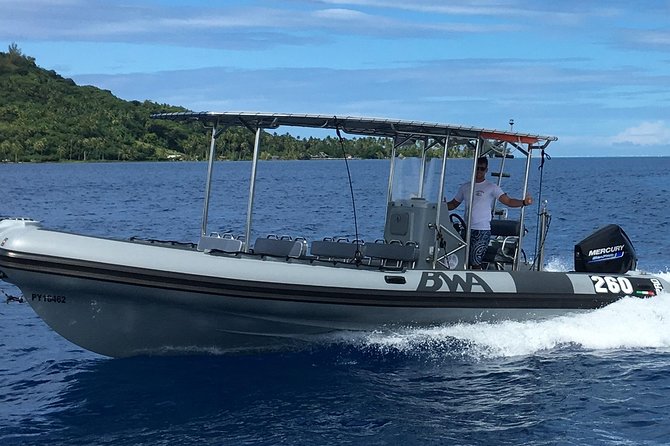
- What boat will you be on?
- Do they provide snorkeling gear?
- Will you be able to swim with the whales?
- Does the tour use a hydrophone?
- Are meals and drinks included?
- What happens if bad weather cancels the tour?
- Is there a cancellation window for a refund?
Key things to know before you go
- Small-group feel on a 26-foot inflatable boat: more attention, less waiting around.
- Hydrophone whale tracking: you’re not only scanning the surface.
- Two naturalist guides: you get the why behind humpback behavior.
- Snorkel gear is included: less gear hassle, more time to enjoy.
- Swimming is conditional: it depends on sea state and how the whales react.
Bora Bora whale watching on a 26-foot inflatable boat
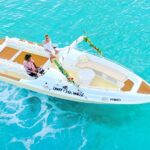
This is not the big-coach style of whale tour. You’ll be on a brand-new 26 feet inflatable boat, which feels more nimble and intimate than the larger vessels that lumber along in search of wildlife. That matters in Bora Bora, where your chances depend on speed and on getting into the right patch of ocean quickly.
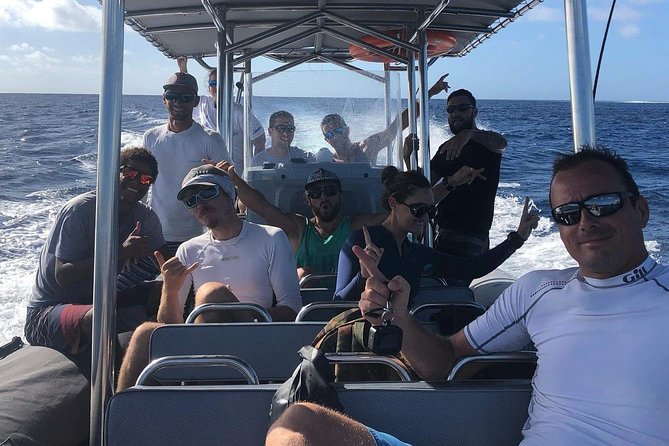
The tour is also “private for your party,” meaning you’re not sharing the same boat experience with a random mix of other groups. The group cap is small: up to 10 people per booking, with an overall maximum of 12 travelers noted. In plain terms, you should expect space, easier conversations with the guide, and fewer people competing for camera angles.
One practical note: pickup and drop-off are included, but they depend on whether there’s a pontoon at your location. If you’re staying somewhere with a dock setup, great. If not, the “pickup” might be closer than you hope, so plan to be flexible with where you board and disembark.
You can also read our reviews of more whale watching tours in Bora Bora
Hotel pickup, live onboard guidance, and what the guides do differently
You’re not just dropped onto the water and left to watch. You get live commentary onboard from a professional guide, plus two naturalist guides who are there to interpret what you’re seeing and what’s happening beneath the surface.
The guides also use a hydrophone, which is one of the coolest tools for this kind of tour. Instead of guessing, you can listen to humpback songs and calls while you search. Even when whales are not right next to the boat, that audio helps you understand where their attention is moving and why your captain is changing course.
This is the kind of tour where knowledge improves the experience. When a guide explains humpback behavior in context, you start spotting the signs that matter: movement direction, surfacing patterns, and moments when the boat needs to slow down or hold position.
Hydrophone tracking: why listening helps you find humpbacks
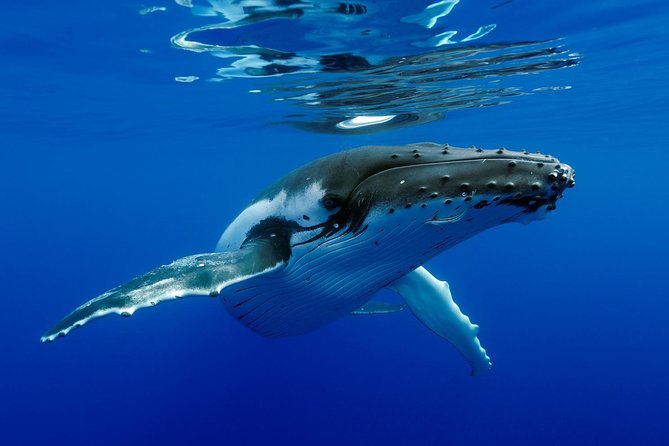
Humpback whale watching isn’t a drive-to-a-viewpoint activity. These animals roam, and your success hinges on timing and ocean conditions. The hydrophone gives the crew an edge because whale vocalizations travel well underwater.
So what you experience is more than spotting. It feels like a hunt with a method: your captain and guides are not only scanning for blows and flukes, they’re also monitoring the underwater soundscape. When the hydrophone lines up with what the crew is seeing, the odds improve that you’re close to active whales.
If the whales are singing, you’ll likely hear the guide translate what it means in real time. That turns “we saw something” into “we knew where to look and why.”
Snorkeling gear included, but swimming with whales is never guaranteed
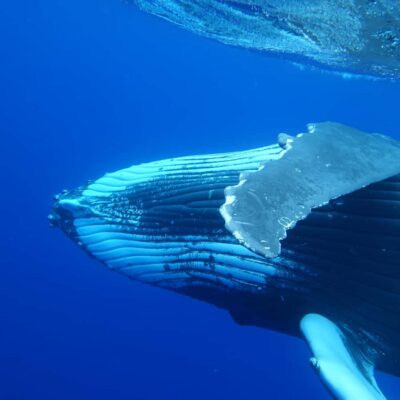
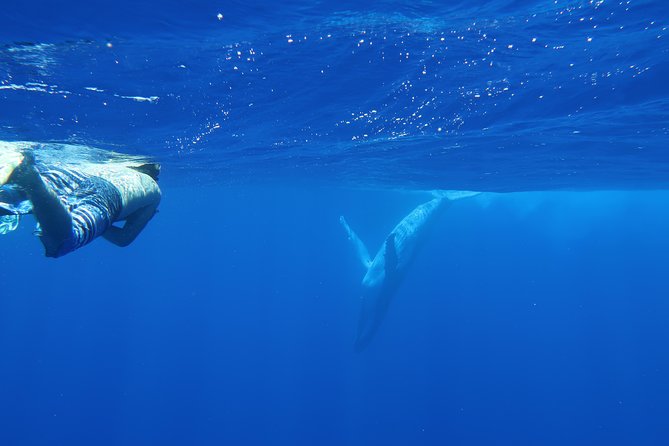
Snorkel gear is provided, and the option to swim is a big part of the appeal. If conditions are favorable, and if the humpbacks accept you, you can slip into the water next to them. That wording matters.
First, sea state is a real factor. One featured highlight in the feedback is that the ride can be rough, which can stop safe swimming even when whales are nearby. This isn’t a flaw—it’s ocean physics and safety rules. When waves are high, you may have to observe from the boat, or your time in the water may be limited.
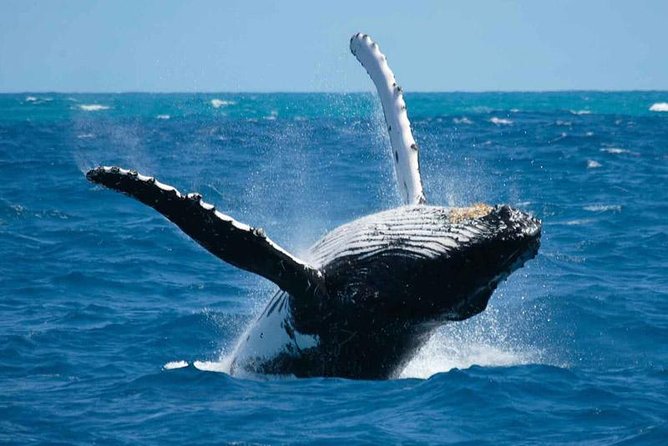
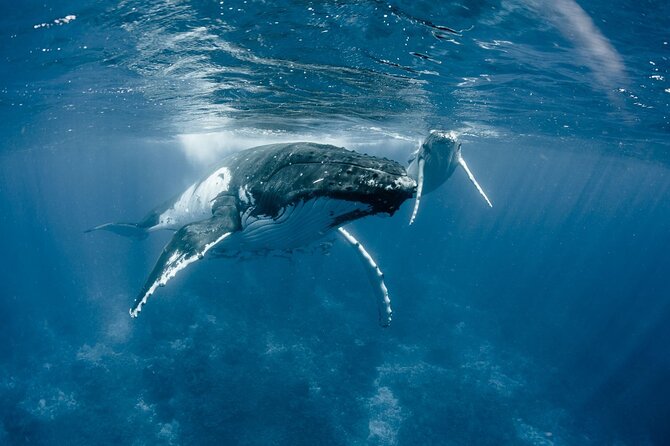
Second, the whales make the call. Even the best crew can’t force a whale to approach. In the same way you wouldn’t want a scuba group crowding wild animals on purpose, the tour’s goal is to respect their space. When whales don’t come close enough, your experience is still valid: you may see mother and calf behavior from the boat, or catch a dramatic jump at close range without swimming.
What I’d do to maximize your odds of a good swim experience is simple:
- Dress for wind and spray, not just sun.
- Be ready to get in quickly if the captain signals it’s safe.
- Keep an eye on the guide’s instructions; small adjustments in posture and timing matter in choppy water.
Aquabike Adventure stop: how it fits into the day
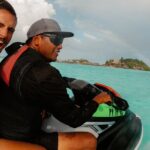
The tour includes an Aquabike Adventure stop. The specific details of that activity aren’t spelled out here, but its presence tells you the outing isn’t only “sit and watch.” You’re likely to get some active time while you’re on the water.
For you, that can be a plus if you want more than wildlife spotting. It also can help break up the pacing of the search. Still, keep your expectations flexible: whale-watching priorities come first, and the day’s order can shift depending on what the guides spot and what the whales do.

What you get for the price: value beyond the sticker cost
At $309.73 per person, this is a premium experience. The question is what you’re buying besides the title “Bora Bora whale watching.”
You’re paying for four big things that add up fast:
- Private attention for your party, with a small max group size.
- Two naturalist guides and live commentary, not just a captain with binoculars.
- Hydrophone tracking, which is a specialized tool, not a gimmick.
- Included snorkeling gear plus light refreshments and bottled water.
Also, remember the duration is about 3 hours 30 minutes. That’s long enough for a meaningful search strategy, not just a quick ride with one pass.
Could you find cheaper tours in Bora Bora? Sure. But if you want the combination of small-boat access, guided science, and the realistic chance to swim, this price starts to feel more like “paying for better odds and better interpretation.”
Alcohol is not included, though you can buy it. If you like to travel with drinks, budget for that separately.
Rough water reality: how conditions shape what you experience
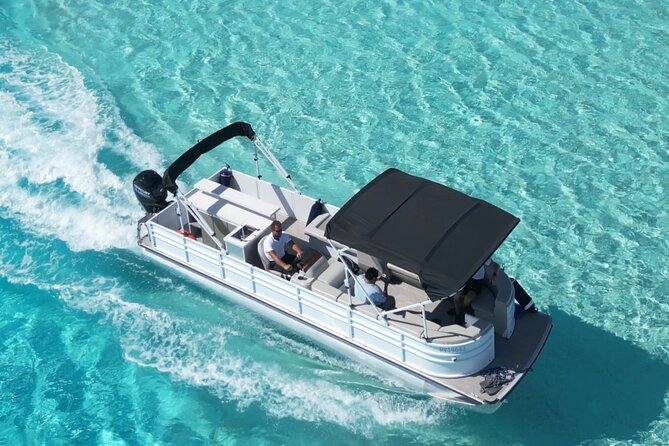
This tour requires good weather. Even when weather is “good,” Bora Bora can still hand you a choppy ride, especially on open water days. You’ll notice this in the feedback through a repeated theme: people can spot whales, but the sea state may prevent swimming, or make the return bumpy.
So plan your mindset like this:
- Your primary outcome is wildlife sightings.
- Your secondary outcome is swimming, and it depends on conditions.
If you’re prone to motion sickness, take that seriously. Choose light clothing that you’re comfortable getting wet in, and bring a layer you can keep on during spray. Sunscreen helps, but don’t rely on it alone—wind can steal it off faster than you expect.
And if you have a strict “I must swim no matter what” expectation, know that the operator explicitly ties swimming to whale acceptance and water conditions. That’s not bad customer service; it’s the nature of dealing with wild animals.
In cases where the tour is canceled due to poor weather, you’ll be offered a different date or a full refund. That gives you a safety net if the ocean simply won’t cooperate.
Should you care about photos and filming?
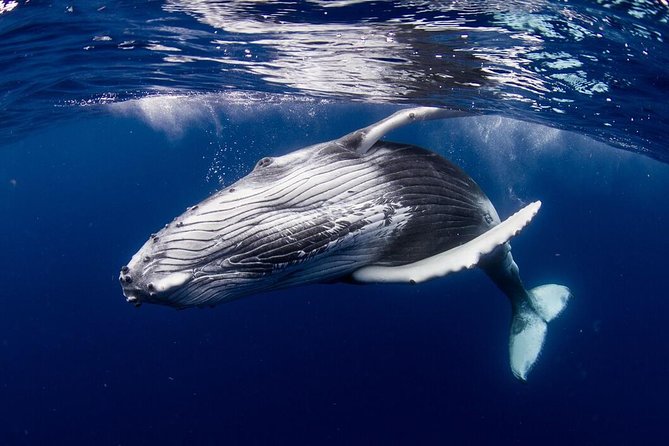
One important practical detail: the included experience doesn’t position photo or video coverage as part of the service. A customer issue described getting help with a personal GoPro, and the operator’s response indicated that taking photos and videos isn’t included in the services, with social media being where whale excursion footage may appear.
So if filming matters to you, don’t assume it’s handled for free. Bring your own gear, but also be prepared that you may not receive copies of any footage from crew equipment. If you care, ask ahead of time what you can expect.
Who this Bora Bora whale tour fits best
This tour fits best if you want:
- Personal attention rather than a mass departure scene.
- Guides who focus on humpbacks and explain what you’re seeing.
- A hydrophone-led search approach.
- The chance to snorkel and possibly swim, even with realistic limits.
It’s also a good fit if you enjoy the small-boat feel. Because the boat is inflatable and compact, you’ll feel closer to the action and the crew’s decision-making.
You might reconsider if you’re very sensitive to rough water, or if you need a guaranteed swim. In the real world of humpback whale encounters, nothing is guaranteed except that the crew will try to find them and keep safety first.
Final call: book this for your Bora Bora whale-watching day?
If your goal is the best mix of small-boat access, hydrophone tracking, and guided humpback knowledge—and you’re okay with the ocean deciding whether you swim—this is a strong choice. The value comes from more than sightings. You’re buying a guided search process and a realistic shot at snorkeling with whales when conditions align.
I’d book it if:
- You want intimate service with a small group cap.
- You like the idea of listening to humpback calls underwater.
- You can roll with rough water and keep an eye out for whale behavior from the boat.
I’d hesitate if:
- You need guaranteed swimming with whales.
- You’re extremely motion-sickness-prone and haven’t prepared for that.
FAQ
How long is the Bora Bora whale watching tour?
The tour lasts about 3 hours 30 minutes.
Is hotel pickup and drop-off included?
Yes, hotel pickup and drop-off are included, but it depends on whether there is a pontoon available.
Is this a private tour or a shared group?
It’s private for your party only, with a maximum of 10 people per booking and a maximum of 12 travelers noted.
What boat will you be on?
You’ll be on a brand-new 26-foot inflatable boat.
Do they provide snorkeling gear?
Yes, snorkeling equipment is provided.
Will you be able to swim with the whales?
Swimming is possible if conditions are favorable and the whales accept you. It’s not guaranteed.
Does the tour use a hydrophone?
Yes, the tour includes a hydrophone to listen to humpback whale songs.
Are meals and drinks included?
Light refreshments and bottled water are included. Alcohol is not included and is available to purchase.
What happens if bad weather cancels the tour?
If it’s canceled due to poor weather, you’ll be offered a different date or a full refund.
Is there a cancellation window for a refund?
You can cancel up to 24 hours in advance for a full refund; canceling less than 24 hours before won’t be refunded.